Rio de Janeiro Food: a Complete Guide to the Carioca Eating Culture
It is no secret why Rio de Janeiro is one of the most visited destinations in Latin America. The city delivers on every front: a massive urban pulse, deep cultural roots, golden beaches, towering mountains, lush jungle, and, what I love the most, an incredibly rich and expansive culinary scene.
When you think of Rio, you immediately picture something jovial, fun, alive, and intensely colorful. Its food represents exactly that. Well, obviously not the «alive» part, but it is undeniably vibrant, diverse, interesting, and intense.
In this guide, I am going to share the absolute highlights of Rio de Janeiro food. I will walk you through the true Carioca cuisine, breaking down exactly what to eat in Rio de Janeiro.

Carioca Cuisine: Food culture in Rio de Janeiro
Before we talk about specific dishes, you need to understand how Cariocas eat. In Rio, food is an outdoor sport. It is a deeply social, public, and unstructured affair. The city’s true dining rooms are not closed-off spaces with white tablecloths; they are the golden sands of the beach and the crowded sidewalks outside a neighborhood tavern. Eating here is more about conviviality. It isn’t something you stop to do. It’s part of the day, part of the beach, just an excuse to stay outside a little longer…

The Carioca Pantry: The Influences Behind Brazilian Cuisine
As I always say, the food culture of any place is intrinsically tied to its history and the people who passed through it. In the case of Brazil, and specifically when exploring the foods in Rio de Janeiro, we can clearly distinguish three main influences that shaped the local pantry:
The Indigenous Foundation
Long before colonization, Indigenous peoples mastered manioc (cassava). This root is the absolute base of the Brazilian pantry. You will see it everywhere: as toasted farofa sprinkled over stews, or baked into the famous cheese bread (pão de queijo) brought in from neighboring regions.

The African influence
Rio’s food DNA is deeply Afro-Brazilian. This influence brought dendê (a bright orange-red palm oil) that colors and flavors coastal stews, as well as the beautiful culture of feeding people generously in public. And while other parts of Brazil eat brown beans, Cariocas are fiercely loyal to the black bean.
The Portuguese Heritage
When the Portuguese royal court arrived, they brought a European cafe culture, a deep love for salt cod, and convent-style sweets heavily reliant on egg yolks and sugar.
Rio de Janeiro Restaurants and food stalls
When searching for the best Rio de Janeiro restaurants, you will quickly realize that the most authentic spots do not always look like traditional dining rooms. To experience real everyday eating and authentic Rio de Janeiro nightlife, these are the 4 main institutions I always point people toward:
The Boteco
This is the actual heart of local socializing. Think of unpretentious corner bars with marble counters where locals stand on the pavement, drink ice-cold draft beer, and share deep-fried bar snacks. It is relaxed, rustic… Informal. Exactly what you’d picture for a Rio de Janeiro spot.

The Quiosque de Praia
In Rio, the beach is quite literally an extension of the dining room. Picture this: you are sitting under a thatched umbrella right on the sand in Copacabana or Ipanema, wearing flip-flops, just listening to the waves. You are sipping fresh coconut water or an ice-cold drink, and snacking on a crispy, deep-fried pastry. It is the chill spot, and to me, it is where the real vacation actually happens.
The Casa de Sucos
Found on nearly every corner, these open-air juice bars are daily staples. But what truly makes them unique is the mind-blowing tropical fruit they display. You simply cannot talk about Brazilian cuisine without mentioning native fruits from the Amazon and the Atlantic Forest. The Casa de Sucos is where you experience these flavors in action.
Fine Dining Scene
Not everything is beach kiosks and botecos. Rio de Janeiro has world-class cuisine… A serious, Michelin-backed fine-dining scene. The main districts for this type of cooking are Ipanema, Leblon and Botafogo.
Iconic Brazilian Dishes: What You Can’t Leave Rio Without Trying
If you want to eat like a local, you need to know exactly what to order and, just as importantly, where you should be eating it. Here is my personal list of the essentials:
Feijoada
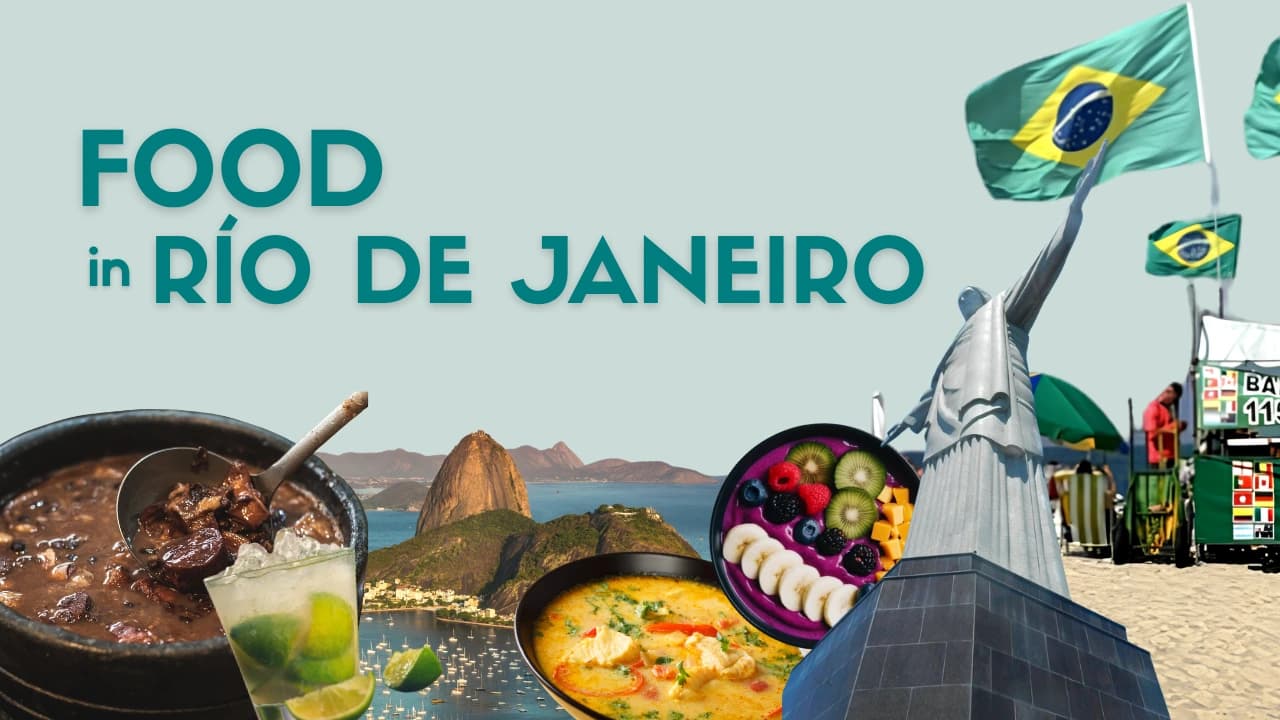
This is the closest thing Brazil has to a national dish, and in Rio, it is a sacred Saturday ritual. It is a rich, slow-cooked black bean stew loaded with various cuts of pork and beef, served with rice, farofa, and collard greens.
Petiscos & Ice-Cold Draft Beer
Petiscos basically are bar snacks. Think of them as Brazil’s equivalent to Spanish tapas or an Argentine picada: savory, bite-sized comfort foods meant to be eaten slowly while sharing a conversation. They go so well with an ice-cold draft beer.
My three personal favorites are:
- Pastel: A large, ultra-crispy deep-fried pastry pocket filled with meat, cheese, or palm heart.
- Dadinhos de Tapioca: Crispy, golden cubes of tapioca pearls and local cheese, usually served with a sweet and spicy pepper jelly.
- Coxinha & Bolinho de Bacalhau: The teardrop-shaped shredded chicken croquette, and the classic salt-cod and potato fritter.
Tropical Fruits, Sucos & Açaí Bowls
Brazil’s fruit galaxy is mind-blowing, and there’s a lot you can try if you’re into fruits.
- Fresh Juices (Sucos): You must try native juices like caju (cashew fruit) or maracujá (passionfruit, my favourite).
Pro tip: While you are ordering your drink, grab a warm pão de queijo (a gluten-free cheese bread made from manioc starch). I know it does not sound like a match, but a Suco paired with pão de queijo goes pretty well!
- Açaí Bowls: An Amazonian super-fruit that Rio turned into a beachside lifestyle. Now it has spreaded around the world! But clearly, trying it during your perfect scape in Rio sounds better… Traditional Carioca açaí is served thick, icy cold, and blended naturally, sharing a texture similar to ice cream or thick yogurt.
While fresh banana and crunchy granola are the classic toppings, many spots will let you customize it further to your liking. Grab a bowl at a Casa de Sucos or a beach quiosque in Ipanema to cool down after the beach.
Moqueca & Picanha
For a heavier, sit-down meal, these two are mandatory.
- Moqueca: A glorious coastal seafood stew cooked in a slow simmering clay pot. It wraps fresh, tender catch-of-the-day fish and shrimp in a velvety, aromatic bath of coconut milk, ripe tomatoes, sweet peppers, and dendê oil. It hits your palate with both rich earthiness and coastal freshness. You’ll find it at a Restaurante Baiano (Afro-Brazilian restaurant).

- Picanha: If love meat just as i do, o churrasco (Brazilian barbecue) is essential, and the picanha (sirloin cap) is the best of the grill! What makes it completely different from other cuts is its thick, succulent layer of fat that renders directly over the open fire, bathing the beef in its own juices and giving it an intensely savory, melt-in-your-mouth crust.
Where to Eat in Rio de Janeiro: The Culinary Epicenters
This is how the city’s food scene is mapped out: the actual cheat sheet. While you can find great neighborhood spots all over town, Rio’s best culinary action is heavily concentrated in a few key districts:
Leblon:
It is chic, incredibly scenic with its mountain views framing the ocean, and strikes that perfect balance of being relaxed without ever feeling sloppy. Keep in mind that it can get very quiet and residential, which is absolutely perfect if you are in the mood for a peaceful, upscale evening rather than a loud night out. It offers a sophisticated yet semi-casual dining vibe, a massive variety of spots, and an authentic, high-end vacation feel.
Ipanema:
Right next to Leblon but much more social and vibrant. If it was a song, would definitely be a bossanova. This is where neighborhood life spills onto the streets, perfect for an afternoon stroll.
Pro tip: Both in Leblon and Ipanema, the sunsets over the water are an absolute spectacle. The ultimate local plan is to catch the golden hour by the beach and roll right into dinner!
Copacabana:
I know it is the classic choice, but this is honestly one of my personal favorites. It just has that unmistakable, pure vacation vibe that instantly puts you in holiday mode. Of course, it all depends on the travel style you are looking for. It can be a bit chaotic and much more crowded than Leblon. But if you are in the mood to hop between old-school botecos and lively beach kiosks, Copacabana delivers an unapologetically fun experience.
Botafogo:
The city’s world-class restaurant hub. Here you will find high-end dining and top-tier chefs, though it has a completely different, urban energy compared to the beachside neighborhoods.
Rio de Janeiro Food and Travel Frequently Asked Questions
Do I need to tip at Rio de Janeiro restaurants?
In most restaurants and botecos, a standard 10% service charge is automatically included in the final bill. You are not strictly required to leave extra, though rounding up for exceptional service is always appreciated.
Where are the best Rio de Janeiro restaurants located?
For the best culinary experiences, the South Zone is the ultimate hub. Neighborhoods like Leblon and Ipanema are packed with everything from casual beach kiosks and lively botecos to Michelin-starred dining spots.
What is an açaí bowl and what does it contain?
Traditional Carioca açaí is an Amazonian super-fruit whipped into a thick, icy cold sorbet with a texture similar to ice cream or thick yogurt. While classic bowls are traditionally served topped with sliced fresh banana and crunchy granola, many local spots and juice bars will let you customize your toppings even further.
Is Rio de Janeiro dangerous for travelers?
Like any major global metropolis, Rio has areas you should be mindful of, but the main tourist and gastronomic hubs, especially the South Zone districts like Leblon, Ipanema, and Copacabana, are generally safe, highly walkable, and welcoming to visitors. Standard common sense applies: keep an eye on your phone while walking around.
Does Uber work in Rio de Janeiro?
Yes, absolutely, and it is generally my go-to recommendation for getting around the city. Uber is widely available, reliable, and usually much safer and cheaper than hailing a traditional street taxi, especially at night. Just make sure to keep your phone tucked away safely when stepping out of the car.
Keep Exploring
Rio’s food scene is unforgettable, but there is a whole world of flavors out there waiting for you. Check out our Travel Guide to discover more destinations and the authentic dishes you simply cannot miss.