Argentine Food Culture: The Ultimate Guide to Eating in Buenos Aires
«Tell me what you eat, and I’ll tell you who you are.» It might be a slightly exaggerated twist on the old saying, but from my point of view, food reveals much more about our culture, history, and daily rhythm than it seems.
Our cuisine is a map of who we are. Argentine food is the legacy of the immigrants who arrived on ships, blended with the roots of our native people. It is the story of our Argentine soil, from the fruits that ripen into world-class wine to the endless Pampas where our renowned beef is raised.
Climate conditions, history, and culture condense onto our plates. And it is around these flavors, that we have crafted rituals that move far away from the notion of food as fuel, transforming the act of eating into something to be shared, enjoyed, and lived.
This guide is my personal take on what Argentine food truly is. Consider it a roadmap for you to know what to try, where to find its best version, and the essential tips you need to dive deep into the culinary life of Argentina.
What’s on the Menu
- The Rhythm of Eating in Buenos Aires(when and how we eat)
- The Traditional Savory Dishes
- The Street Food Ritual
- The Sweet Heritage
- What Argentines Actually Drink
- Experience the city like a Local
The Local Eating Rhythm in Buenos Aires(When & How we Eat)
Before we dive into what to eat, you may need to dive into the unwritten culinary rules.
The Timetable: When we Eat
Breakfast
Here, the morning is sweet and simple. Maybe it is because the day can get complicated later, so we prefer to ease into it. It’s usually a café con leche paired with medialunas (our smaller, stickier, sweeter version of croissants) or tostadas (toast) with cream cheese, butter or dulce the leche. It’s quick, and usually happens between 8:00 AM and 10:00 AM.


Lunch
Usually between 1:00 PM and 3:00 PM. It can be a quick bite or a long, wine-fueled affair if it’s a Sunday. On workdays, however, we keep it practical.


Merienda (Tea Time)
This is the bridge between lunch and our late dinner. It happens around 5:00 PM to 7:00 PM. It’s socially acceptable to drink more coffee, mate, or tea, accompanied by something sweet. Do not skip this, or you won’t make it to dinner.

Dinner
This is the biggest shock for travelers. If you show up at a restaurant at 7:00 PM, you will likely find the staff still setting the tables. Locals eat late. 9:00 to 10 PM is prime time.
The Food Venues Landscape in Argentina
There are many kinds of restaurants in our gastronomic culture and each brings something different to the table (literally and figuratively). Let me tell you a bit about them, and how to identify what you’re looking for.
Bodegones
These are the keepers of our history. Picture traditional canteens, often decorated with hanging hams, old sodas, and maybe some soccer memorabilia. They serve «grandmother-style» argentine food: huge portions, homemade pasta. You come here for the noise, the waiters who call you «maestro,» and the nostalgia vibes.


Parrillas
The temples of fire, the steakhouses. From upscale dining rooms to hole-in-the-wall joints with a massive iron grill. This is where the Asado happens.
Cafés Notables
These are coffee bars officially recognized as cultural heritage in Buenos Aires. Frozen in time, filled with dark wood, leather, and literary ghosts. They are not into finding the perfect «single origin» coffee bean (please, don’t you dare asking for a flat white). These spots are meant for reading a book and feeling like you are in the 1920s.

Specialty Coffee Shops
The modern wave arrived in Argentina a few years ago. Specially in the big citys like Buenos Aires, Córdoba and Rosario, Minimalist aesthetics, flat whites, and sourdough avocado toast. They are the sharp, hip contrast to the classic café.

Las Pizzerías
Usually bright, loud, and chaotic (like the city itself). These are not romantic spots; they are fast-paced temples of mozzarella where many locals eat a slice «de parado» (standing up) at the counter.
Panaderías (Bakeries)
There is one on almost every block. It is a daily stop for a loaf of bread or a pastrie. The first time I lived abroad, it was a shock to see bread sold mostly in supermarkets. Here, it is baked fresh just around the corner, and you can taste the difference.
Street Food
While we don’t have food carts on every corner, we have our specific spots, mostly around parks, festivals, riverwalks and, crucially, soccer stadiums.
The Traditional Savory Dishes
Asado
First, a clarification: please do not translate Asado as «Barbecue.» It is a noun with a double meaning. Yes, it refers to the argentine food, but it is also the event itself. You can eat an Asado, but more importantly, you go to an Asado.
It is a ritual of patience, fire, coarse salt, family, and friendship. It is not just about the meal; it encompasses everything that happens before the fire is even lit and the long hours of conversation that follow eating (the sobremesa).
For us, meat is a source of national pride, but the secret isn’t just the product; it’s the ceremony. Every cut has its science, and every Asador (the designated cook) has their tricks. When the meat finally hits the table, there is a sacred moment where we all clap «Un aplauso para el asador» to honor the effort. It’s communion.


To navigate the grill, these are some of the cuts you need to know:
- Las Achuras (The Starters): These are kind of “the warm-up”. This includes Chorizo (sausage), Morcilla (blood sausage), and my absolute favorite, the Mollejas (sweetbreads).
- Tira de Asado (Short Ribs): The classic Argentine cut. Strips of ribs cut across the bone. It is flavorful, a bit fatty, and best eaten with your hands.
- Vacío (Flank Steak): This is my top 2. It’s a thick, fibrous cut that protects its juices with a layer of fat. It requires slow cooking, but the result is incredibly tender.
- Matambre (Rose Meat): A very thin cut that gets crispy on the grill. Though the «Matambre a la Pizza» (grilled with tomato sauce and melted cheese on top) is a great choice, for an asado I prefer the classic version finished with some lemon on top .
- Entraña (Skirt Steak): A thin, fibrous cut that is intensely juicy. It cooks fast and packs a punch of flavor.
- Bife de Chorizo (Sirloin): The thick, tender steak that made Argentina famous worldwide.
You can’t leave Argentina without experiencing an asado, and the best way would be in the backyard of a local friend. That is the honest truth.
However, if you don’t have that invitation just yet, Buenos Aires offers incredible alternatives, including worldwide recognition restaurants, immersive educational experiences, or simply relaxed neighborhood spots with top-tier meat. Lucky you, I have mapped them out.
Find your perfect match in our Guide to the Best Steakhouses in Buenos Aires.
Milanesa
I get offended when I see «Milanesa» listed on the «Kids Menu» in international spots. For us, this is serious business. For sure, it is the taste of our childhood, but also the ultimate comfort food, and an absolute staple of the local diet. It’s a thin slice of beef (or chicken), breaded and fried (or baked) to golden perfection. Simple? Maybe.

I have tried similar dishes abroad, and the texture is never quite right. The secret is the Pan Rallado. Unlike the coarser crumbs or Panko often used elsewhere, our traditional breadcrumbs are ground very fine. This creates a compact, golden crust that clings to the meat like a second skin, absorbing just the right amount of flavor without becoming oily.
While the undisputed sides are french fries or mashed potatoes (puré).If you are at a restaurant, I strongly recommend asking for a «Puré Rústico» (rustic style) or one with herbs. It elevates the experience.
My favourite? The Milanesa de Bife de Chorizo at “El preferido de Palermo”.
Empanadas
Empanadas are a hybrid: they are a dish, but they are also street food. You can eat them sitting down, but there is a specific skill to eating them standing up: open your legs slightly and lean forward. Why? Because a good meat empanada is juicy, and «hot grease vs. clean shoes» is a battle you don’t want to lose.

While there are as many versions as there are provinces, in Buenos Aires you can find them all. To order like a pro, you need to know the 3 regional heavyweights:
- La Salteña: This one is usually baked. It is filled with knife-cut meat, hard-boiled eggs, scallions, and cubed potatoes. They often pack a spicy punch.
- La Tucumana: They generally use matambre (rose meat) cut strictly by knife (never ground beef). They are incredibly juicy and seasoned with cumin. All empanadas are good, but these are absolutely great.
- La Cuyana (From Mendoza/San Juan): Baked in clay ovens. These are famous for their juiciness, achieved by using a high ratio of onions to meat.
Just as a personal note: My grandmother used to add white wine to the homemade dough, which made it epic. Honestly, I haven’t found a restaurant that matches her secret recipe yet, but the style remains a must-try.
Beyond the Beef: The Other Classics
- Jamón y Queso (Ham & Cheese): This is the one that cannot fail. It sounds basic, but you should look for the ones made with «Masa de Hojaldre» (puff pastry). When the cheese melts inside those buttery, flaky layers, it is unbeatable.
- For Vegetarians: You are safe here. Humita is a creamy, sweet corn paste with béchamel sauce and cheese, a native flavor everyone loves. You will also find Verdura (Spinach/Chard with white sauce) or Queso y Cebolla (Cheese & Onion) in almost every shop.
Find the ultimate inspiration in our list of the best places to enjoy empanadas in Buenos Aires.
Pizza: The «Porteño» Mutation
Argentina was home to many Italian immigrants at the beginning of the 20th century. Our food culture is deeply attached to the international influences we went through. Having said that, you could guess pizza here isn’t «international food» but part of our local cuisine. Still, while the roots are Italian, the evolution is strictly Argentine.
So… while the thin, airy Neapolitan style is trending right now (and actually, I prefer it), the real Pizza Porteña (from Buenos Aires) is a distinct mutant.

Pizza porteña vs Italian Pizza
The Dough (Masa al Molde): Unlike the thin Italian crust, our traditional pizza has a thicker, spongier dough (cooked in a pan). Why? I would call it an architectural necessity. It is designed to hold the weight of an obscene amount of cheese.
The Fainá: You will see locals ordering a slice of pizza with a thin, yellow triangle on top. That is Fainá, a dense flatbread made of chickpea flour. We sometimes eat it «A Caballo», meaning one bite includes both pizza and fainá. It sounds as heavy as it is, but the dry texture of the chickpea perfectly balances the oily creaminess of the mozzarella.
The Ritual «De Parado»: In the classic Pizzerías on Corrientes Avenue, there is no need to wait for a table. We can eat «de parado» (standing up) at the counter. You order two slices and a beer, you eat amidst the noise, and you wipe your hands with those tiny wax-paper napkins that don’t really clean anything. It’s not fancy, but it is worth a shot, even if just for the story.
To experience this, head straight to Güerrin. It is a temple of the style, offering not only the classic Muzzarella but an endless (and rather peculiar) variety to explore.
La Picada
This isn’t a specific Argentine dish; it is our version of a Charcuterie board or Tapas, but much more rustic.
There is no fixed recipe, but a respectable Picada must have Salame (salami), Queso (cubes of cheese, usually Pategrás), and Pan (bread). From there, it’s a free-for-all: peanuts, olives, potato chips, and ham.

How does it work? It is strictly finger food, and it plays two very different roles:
- The «Prequel» (Before the Asado): served while the meat is on the grill to calm the hunger(It is a trap).
- The Main Event: Sometimes, we just don’t want to cook. If friends come over for drinks or to watch a soccer match, a massive Picada is the dinner. No cutlery, no plating, just reaching into the center of the table and grabbing a cube of cheese while arguing about the referee.
The Street Food and Informal Eating Culture in Argentina
As I said, we don’t have food carts on every single corner. In Argentina, street food is a destination in itself. You find it clustered in specific ecosystems: riverside promenades, large parks on weekends, music festivals, and outside soccer stadiums.
The street menu is generally carnivorous and sandwiched between bread. While the Choripán is the main character, the Sándwich de Bondiola (pork shoulder) is a scene-stealer that holds its own.
The Choripán ritual
This is an experience for the brave. It is often spicy, greasy, and messy.
For me, Choripán is linked to my soccer team. When we win, eating a Chori on the way out of the stadium is the trophy, the reward for having left everything in the stands. When we lose, it is the consolation prize.

As someone who really appreciates high standards when it comes to food, I apply an exception when it comes to choripan. That is the «Trust the Process» Rule. In these street spots, hygiene standards are… let’s call them «rustic.» Don’t ask about permits. Don’t look too closely at the cooler. Just trust the fire. I mean, of course you will notice which of the spots around is the “safest” choice, but do not expect an operating room.
Insider’s tip: look for the spot with the longest line. High turnover is the best quality control!
However, if it’s your first time or you want to ease into it, there are levels to this game and you don’t need to be a soccer fan at all. You can choose the modern, gourmet route in spots like CHORI (even offer vegetarian versions), or experience the classic ‘Carritos’ in Puerto Madero, where the paradox is fascinating and these rustic options confront the city’s most expensive skyscrapers.
If this made you hungry or curious, check the full article on Buenos Aires’ street food!
The Argentine Sweet Heritage (Dulce de Leche & Friends)
Dulce de Leche: The National pride
If Argentina had a flag for flavor, this would be it. Legend has it that it was created by mistake in 1829, when a maid forgot a pot of milk and sugar on the fire. The result was this thick, caramel-like jam that runs through our veins. You will find similar versions across Latin America (Manjar, Arequipe), but let’s be clear: the Argentine version is superior. (Sorry, Uruguay, i’m not debating this).
My Personal Take: Some locals eat this by the spoonful. Personally? I find that too intense. I prefer it spread on toast or mixed with something that balances the sweetness. But please, don’t let me stop you from attacking the jar.
Chocotorta: The Champion of Simplicity
This is the dessert that never fails. It is not made by a Michelin-star pastry chef; it was likely invented by a marketing team, but we adopted it as our own. It’s a no-bake cake made of layers of chocolate cookies soaked in coffee or milk, stacked with a mixture of cream cheese and Dulce de Leche.
- Why it works: It’s fresh, simple, and hits every pleasure point without being heavy.
- Where to find it: Almost every modern coffee shop has a version. Or honestly? You can buy the ingredients at a supermarket and make it in your Airbnb. It’s that easy.
Alfajores: The Cookie Sandwich
The concept is simple: two cookies joined by a filling (usually Dulce de Leche) and often covered in chocolate. Anyways, there are different kinds. Here is the breakdown:
The » Alfajor de Maicena»
These are made with cornstarch cookies and rolled in coconut. They are delicious but have a tiny little problem: someone must kick you in the chest to help you swallow it. Unless perfectly made, these are usually very dry alfajores. So… try them! but please keep some water nearby.
The Classic Alfajores
There is a massive spectrum here. You have the artisanal, high-end versions that are closer to fine patisserie, like the ones from Havanna, and then you have the industrial «kiosk» highlights, that save your life when you need a sugar fix on the go. “Rasta” would be a good example for those.
My advice? Try both. They satisfy different cravings, and comparing them is part of the fun.

Queso y Dulce (Postre Vigilante)
This is our simplest, most rustic dessert: a slice of soft fresh cheese paired with a slice of sweet potato paste (Batata) or quince paste (Membrillo). It has Spanish roots, but we adapted it to our pantry.
My Personal Take: I’ll be honest: I don’t like it. For me, it’s a bit unusual. But it is a classic, arguably the most traditional way to end a meal in a Bodegón. It’s controversial: you either love the contrast, or you don’t get it at all. You have to try it to judge.
So, this is the sweet starter pack. We haven’t even touched on our world-class Helado (Ice Cream) or the restaurant classic, Flan Mixto. Unlock the full sugar rush in our Insider’s Guide to Argentine Desserts: What and Where to Order.
What and When Argentines actually Drink
Just like our food, our drinking habits (this sounds a little weird) are deeply communal. In Argentina, we don’t drink just to quench our thirst; we drink to extend the conversation.
It is rarely a solitary act. Whether it is passing the Mate around in a park or sharing a bottle of Malbec during a never-ending dinner, the connection is key. We have our own rhythms, our unique national liquors, and unwritten codes.

Living abroad, I was surprised to see people heading to bars at noon or for boozy brunches. Here, the timing is different. While a glass of wine with lunch is perfectly normal, hard liquor and cocktail bars are strictly a nighttime affair (and usually, late night).
From the caffeine kick of the morning to the herbal bitterness of the night, here is how we fuel our chats and fill our glasses.
Mate
You will see people carrying termos under their arm everywhere. Inside the gourd cup, there are dry green leaves and hot water.
Clarification: It is not a drug, it has no weird substances. It is simply an herbal infusion (high in caffeine) that for us, represents company.
The Golden Rules
- It is shared: If you are in a circle, don’t ask for one just for yourself. You drink and pass it back.
- Don’t touch the bombilla: The metal straw is fixed. Moving it ruins the structure of the yerba (i know, it is a whole science)
- The «Gracias» Trap: This is the #1 tourist mistake. In Mate language, saying «Thank you» means «I don’t want any more.» Only say thanks when you are done, you won’t look rude.
The Taste
It is bitter and grassy. There is a huge divide between purists (Bitter) and those who add sugar or sweetener.
Insider’s tip: If it’s your first time, I would recommend you a «Yerba Suave» (mild blend). It might not be the intense local experience, but it is much friendlier for a beginner’s palate.

The Coffee Culture
While specialty coffee is booming all over the country, you must visit a Café Notable if you’re in Buenos Aires. These are historical landmarks.
The icon, Café Tortoni, is a busy spot, but the architecture and history make it worth the queue. This is where Borges, Cortázar, and Alfonsina Storni, among many others, sat to discuss the future of art over a cider or a coffee. The stained glass, the wood, and that heavy intellectual atmosphere make it a must visit.

Fernet
While it has Italian origins, the heart of Fernet is in Córdoba (our central province). It is a dark, herbal, bitter spirit that—let’s be honest—tastes like medicine until you mix it.
The Formula
70% Coca-Cola, 30% Fernet, and ice all the way to the top. The foam is essential and there are tricks to master it.


The «Viajero» Fun Fact
When we were young (or at music festivals), we didn’t use glasses. We cut a plastic Coca Cola bottle in half, burned the edges with a lighter so they wouldn’t cut our lips, and mixed the drink right there to pass around. We call it «El Viajero» (The Traveler). We don’t do this at restaurants or bars at all, but it’s a vital part of our coming-of-age folklore.
Our Wine Culture
Argentina is a «New World» wine country, which means we talk about Grapes. While Malbec from Mendoza is the king that put us on the map, our geography is massive. We have high-altitude wines in the North (Salta) and cold-climate wines in the South (Patagonia).
Grapes to try
Torrontés: The only grape that is 100% native to Argentina. Floral and aromatic, mostly from Salta.
Pinot Noir: Look for bottles from Patagonia (Río Negro). Elegant and earthy.
The Trendy Ones: Bonarda, Petit Verdot, and the comeback of Criolla (a light, drinkable grape that is super trendy in hipster spots right now).

Where to Drink Wine?
The wine bar scene has evolved from the traditional white-tablecloth steakhouses to an incredibly diverse landscape, specially in Buenos Aires. You can find educational spots where sommeliers guide you, or sophisticated jazz bars perfect for a mature, relaxed evening. And for the «cool kids,» there is a massive wave of rustic, vintage-style bars (mostly in Chacarita) where the crowd is young, the wines are organic, and the social life happens as much on the sidewalk as it does inside.
Cocktails bars
Our nightlife is legendary. We start late and end… well, very late. If you have a few nights to explore, I recommend you try to visit these three types of spots to get the full picture.
- A Rooftop Bar
Ideally, during sunset. Watching the city skyline turn into night with a drink in hand is the best way to start the evening.
- A Speakeasy
Buenos Aires loves hidden concepts. Florería Atlántico, hidden beneath a flower shop and consistently ranked among the world’s best, is a classic.
- A Rustic-Vibing-Neighborhood type of Bar
For something louder and local, Tres Monos is a good fit: punk vibe and world-class service.
Thirsty for More?
As you can see, the landscape is massive. We haven’t even touched on the Vermouth or our historic national liqueurs like the Hesperidina.
This was just the overview. If you want to double click on this topic, check out our deep dive guide on Traditional Argentine drinks and where to try them.
A Foodie Neighborhood Breakdown
Buenos Aires is massive, and each district operates with its own culinary personality. To help you choose, here is a quick breakdown of the main gastronomic hubs:
Palermo: The Main Hub
This is the epicenter of dining and nightlife. It is huge (subdivided into Soho and Hollywood) and offers the highest density of options: from Michelin-starred restaurants and Asian fusion to the best cocktail bars.
The Vibe: Loud, intense, and buzzing.
Chacarita and Colegiales: The «Up & Coming»
This is where the local chefs are opening their own indie spots right now. It feels more residential and relaxed.
The Vibe: Sidewalk tables, vermouth bars, specialty coffee, and a «cool» but unpretentious crowd.
San Telmo: The Historic Classic
The bohemian heart of the city. It is steeped in history. This is the best area to find authentic Argentine food in the Bodegones, steakhouses, and the Sunday Market chaos.
The Vibe: Rustic, vintage, and culturally rich.
Recoleta & Retiro: The Posh Up-market
Imagine a European Buenos Aires: wide avenues, palaces, and luxury hotels. The dining scene reflects that sophistication with elegant tea rooms, high-end classic service, and hotel bars.
The Vibe: Polished, quiet, and sophisticated.
Sherpa Food Tours: Experiencing Argentine food like a Local
You can definitely go to all these places alone. You can stand in the long line at a famous parrilla, checking your watch while smelling the smoke from the sidewalk. You can stare at a wine list, trying to guess the difference between a Malbec from Salta and one from Mendoza.
My goal with this guide was precisely to arm you with the insights to handle those moments like a local. I truly hope this article helped you understand the background of our culinary scene and what/how to order while you’re visiting Buenos Aires city.
But there is a better, easier and immersive way to enjoy Argentine food. A way where the logistics disappear, and the magic takes over.
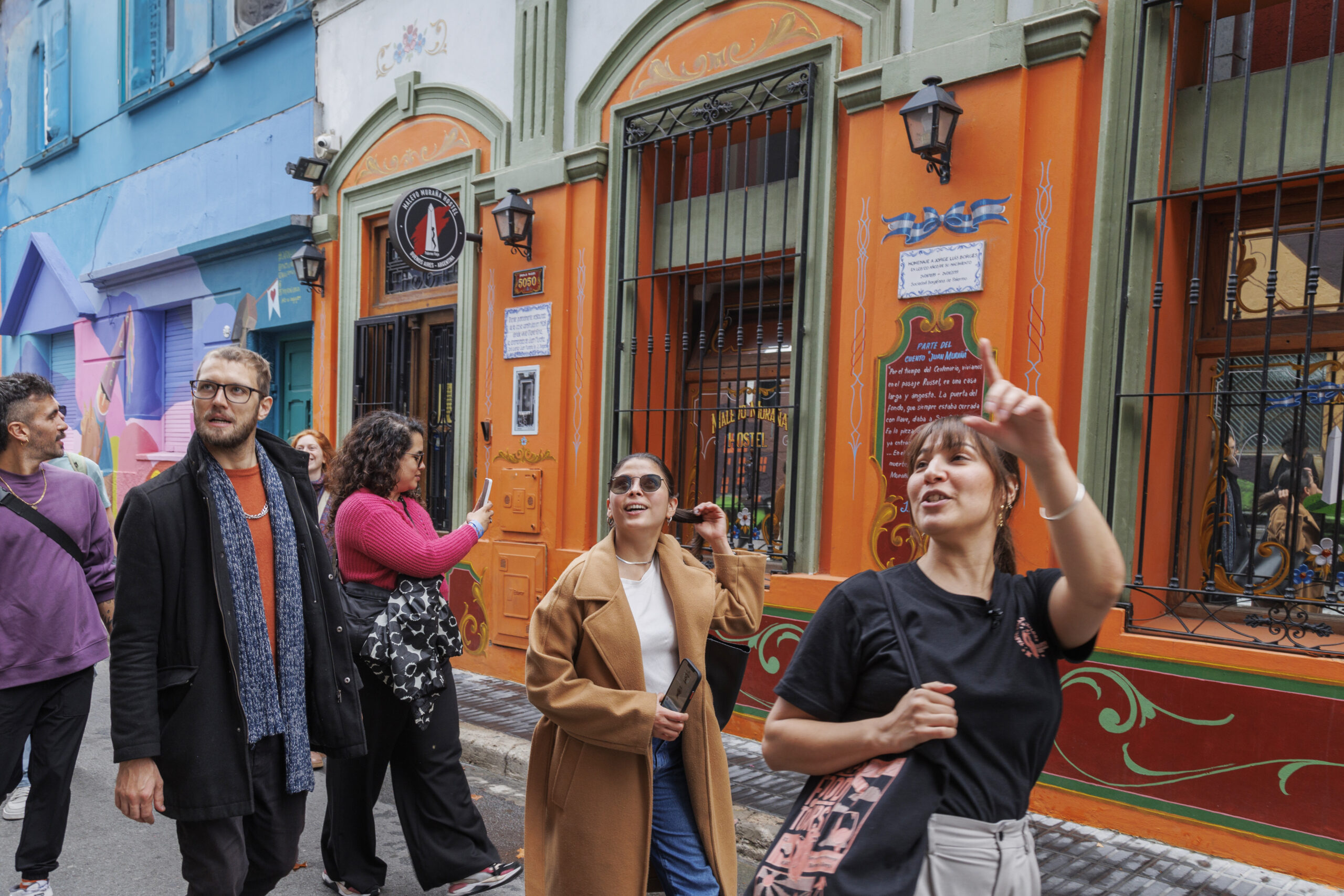
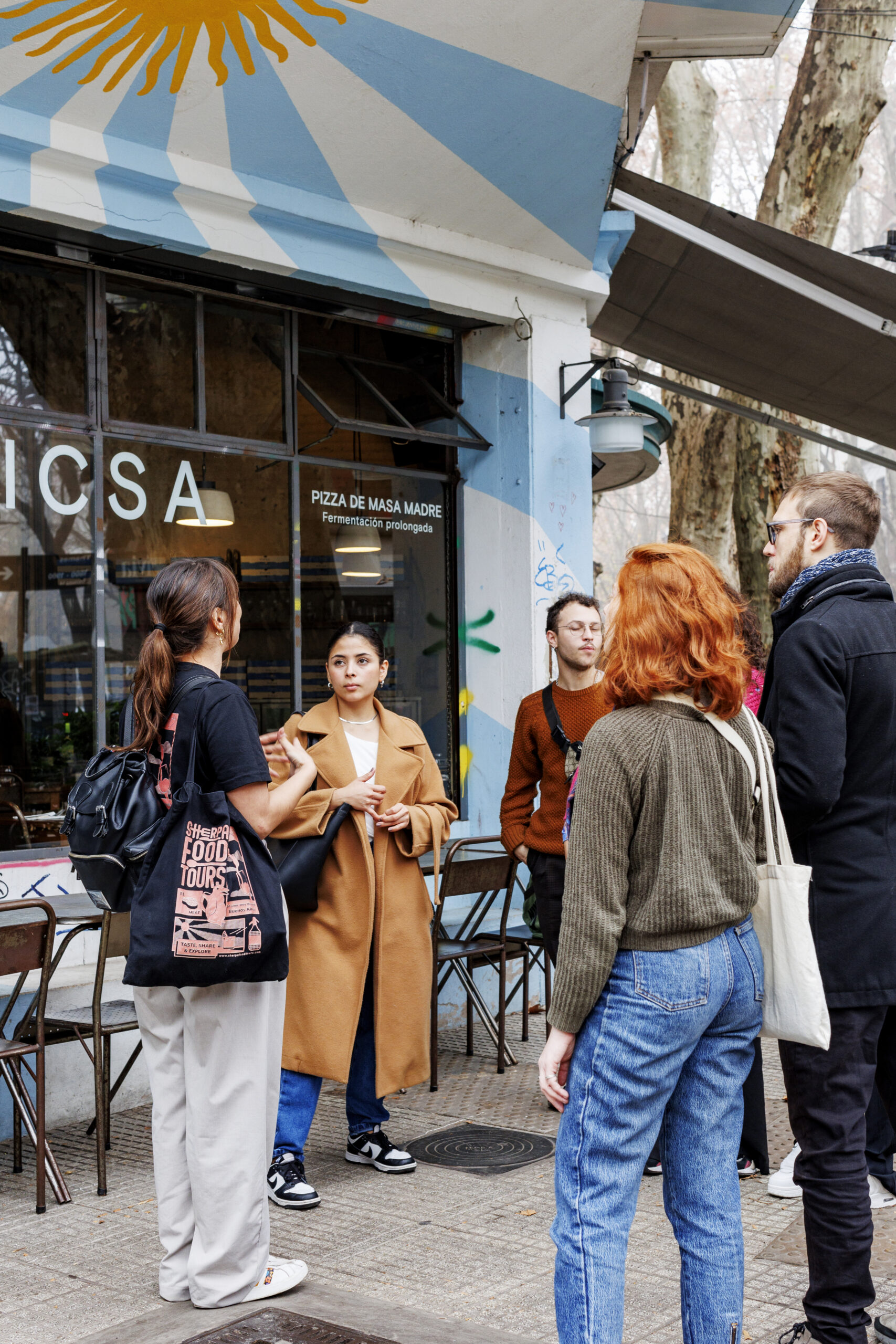
At Sherpa, we bridge the gap between the plate and the culture, turning a simple dinner into a shared ritual.

Here is why you should pull up a chair with us
From Tourist to Local
We unlock the city for you. We explain why we clap for the Asador, why the pizza has so much cheese, and the history behind every bite. You won’t just taste Argentine food; you’ll fully understand the eating rhythm of our city.

The «Insider» Access (Skip the Line)
We know your time is precious. As partners with some of the city’s most sought-after restaurants, we allow you to walk straight in. No waiting on the sidewalk; you go right to the table where the wine is already pouring.
The Joy of the Table
This isn’t a lecture; it’s a dinner party. You will share a feast with incredible people from all over the world. As i said, Argentine food is about connection, laughter. With Sherpa strangers become friends over a glass of Malbec.

Curated with soul and experience
We don’t just take you to the «famous» spots. We mix the hits with the hidden gems, the neighborhood favorites that only us locals know.

Just Relax, We’ve Got It
Navigating a new city is beautiful, but can be stressful. Our friendly insider hosts handle every detail so you can simply relax, taste, and enjoy the argentine sobremesa.
Yes, we are proud to have been trusted by over 20,000 travelers. But our real pride is seeing you leave the table with a full belly, a happy heart, and new friends.
Ready to book? Join us in our Buenos Aires Foodie’s Adventure.
I’ve Shared the Tips, Now It’s Time to Share the Table
I have given you the full roadmap to navigate our Cuisine. We talked about the unwritten rules of Mate, the country’s juiciest Empanadas, our shameless appropriation of Italian Pizza, and… well, so many other things that I won’t list again because, honestly, I hope you were paying attention!
But as I said at the beginning, exploring Argentine food is about much more than just flavor; it is about the stories shared across the table. It is about the mixed cultures, the chaos, the wine, and the people. Eating our food is a truly immersive experience, and you should give yourself that treat.
Table is ready. You can book your spot right here.
Some extra tips to get you ready!
- Tipping: Service is generally not included. 10% is the standard; go for 15-20% if the service was outstanding. Bring cash! While some places allow you to tip via card, servers love cash.
- Money & Cards: The economic situation here is… dynamic. Currently, using your foreign credit/debit card is a great idea because you get a favorable exchange rate. Note: This changes often, so double-check the rules right before you fly.
- Getting Around: Skip the yellow taxis if you can. Use Apps like Uber or Cabify. Select the «Comfort» or «Premium» option. The price difference is usually small, but the difference in car quality is huge.
- Public Transport: To use the bus or subway, you can pay with your card. No SUBE is needed.
- Safety: Argentina is generally safe in tourist areas. However, follow the local rule: «No te regales» (Don’t gift yourself). Do not walk around staring at your phone. If you need to check a map, stop and step inside a shop. Be smart, not paranoid.
- Water: Tap water is generally safe to drink in Buenos Aires, but if you have a sensitive stomach, sticking to bottled water is a smart move.