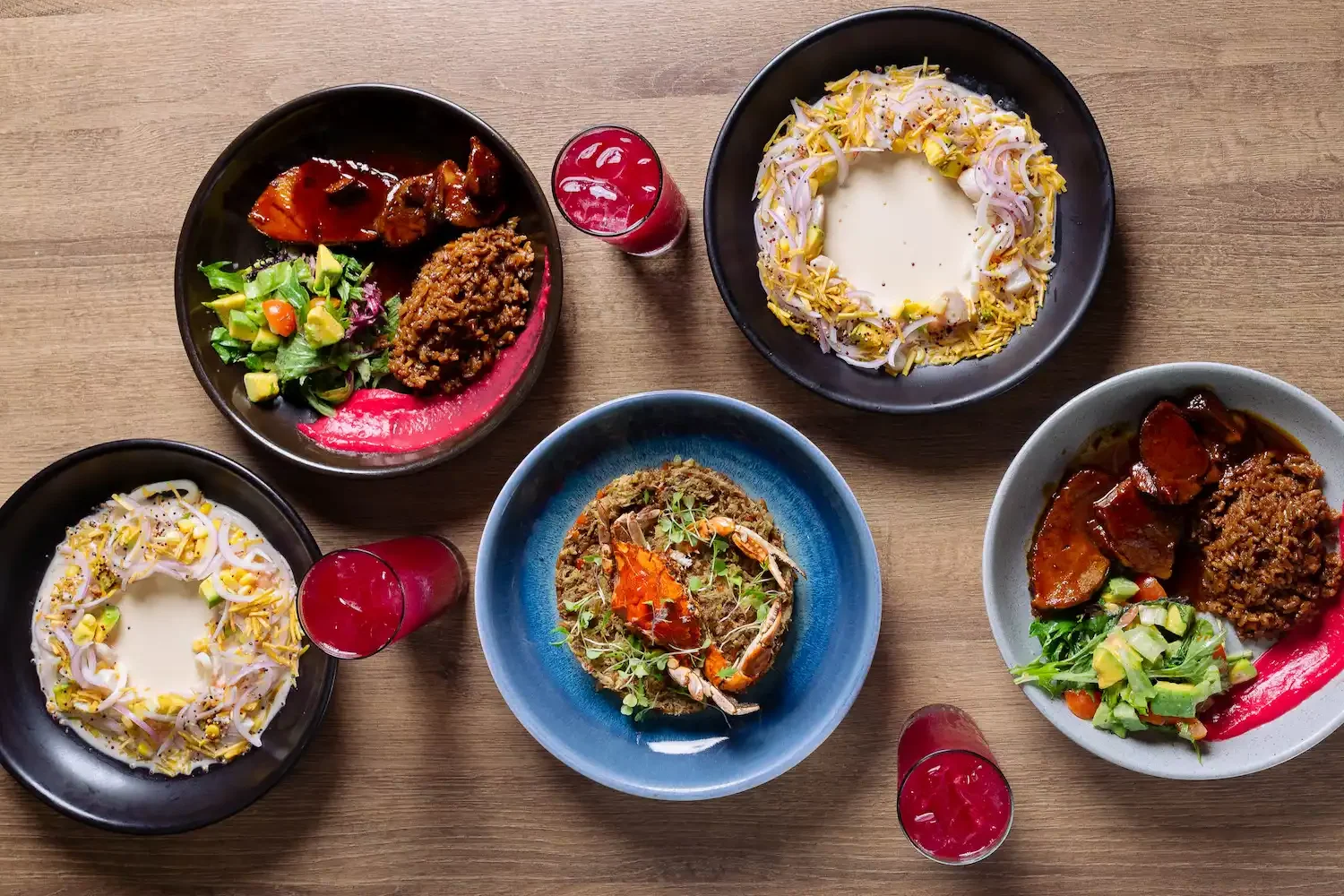
Food in Cartagena: Decoding the Walled City’s Best Culinary Layers
The nobel prize winner Gabriel García Márquez, who spent most of his life writing about the heat, the light, and the impossible magic of Cartagena, once said that nostalgia starts with food. In a 1990 interview, he confessed that what he missed most when he was away wasn’t the colonial balconies or the sea breeze. It was the arepa de huevo, the carimañola, the sancocho...
He wasn’t being poetic. He was being precise. Because food in Cartagena is not a complement to the experience: it IS the experience. It’s the fastest, most honest shortcut to understanding what this city actually is: a Caribbean port where African, Indigenous, Spanish and Lebanese influences have been cooking together for years.
This layered and alive cuisine is impossible to understand from a restaurant with an English menu in the Walled City.
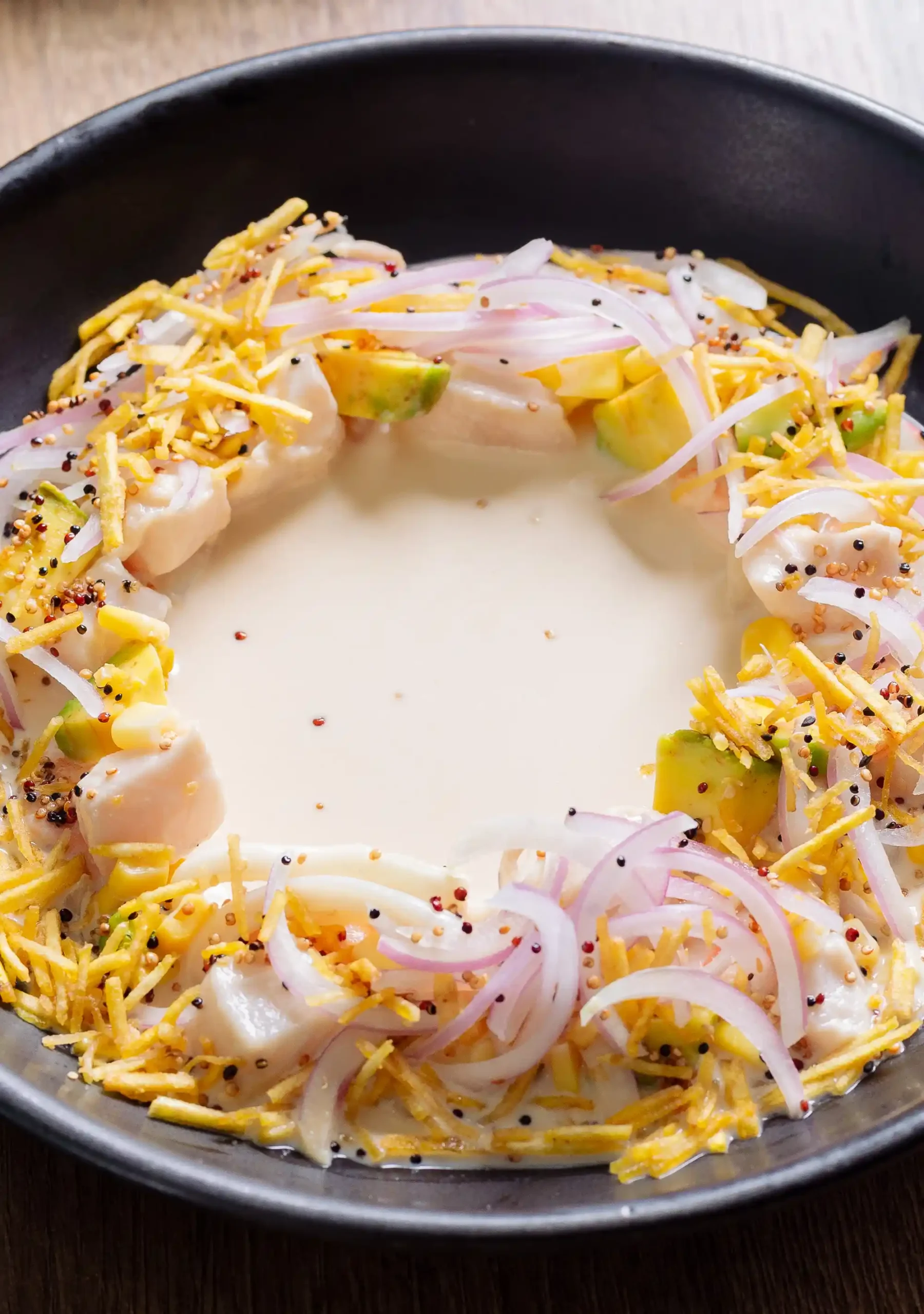
To bring you this guide, our team at Sherpa did what any obsessive local hosts would do: we spent months logging hours at sweltering street corners, learning from ancestral cooks, and mapping out the true culinary architecture of the coast. This article is the result of that collective legwork: everything you need to navigate food in cartagena— not just what to eat and drink, but exactly what each culinary layer means, where to find it, and why it matters.
Let’s eat.
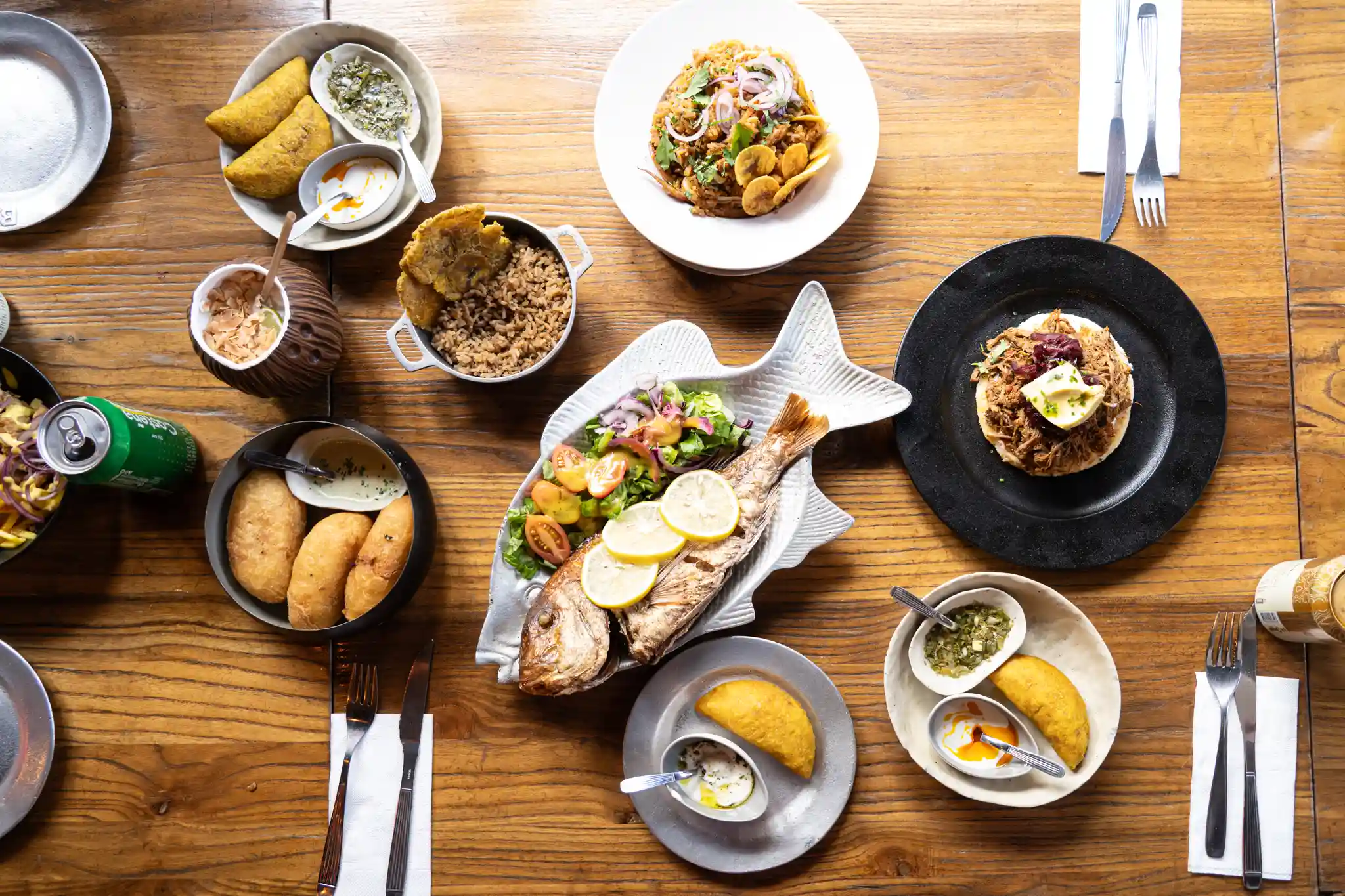
Why Cartagena’s Food Tastes Like History
Most cities have a food scene. Cartagena has a food argument — five centuries of cultures colliding, absorbing each other, and leaving their mark on every plate, every technique, every street corner. Understanding why the food tastes the way it does here means understanding two things: the geography that shaped the pantry, and the history that filled it.
The Geography: Sea, Lagoon, and Hills
Cartagena sits on the edge of the Caribbean, but its food doesn’t come from one source; it comes from three. The sea provides the fish: red snapper, shrimp, blue crab, sierra, caught fresh every morning by fishermen from La Boquilla and the villages around the Ciénaga de la Virgen.
The ciénaga — a vast mangrove lagoon that hugs the city’s eastern edge — is an ecosystem of its own, a brackish world of crabs, clams, and the kind of biodiversity that explains why the same stretch of coastline produces both delicate ceviche and hearty sancocho. And behind the city, the Montes de María hills bring a different pantry entirely: yuca, ñame, plantain, corn, the tubers and starches that anchor every Caribbean Colombian meal.
This is why Cartagena’s food feels so abundant: the land and the sea give generously, and the kitchen learned to use everything.
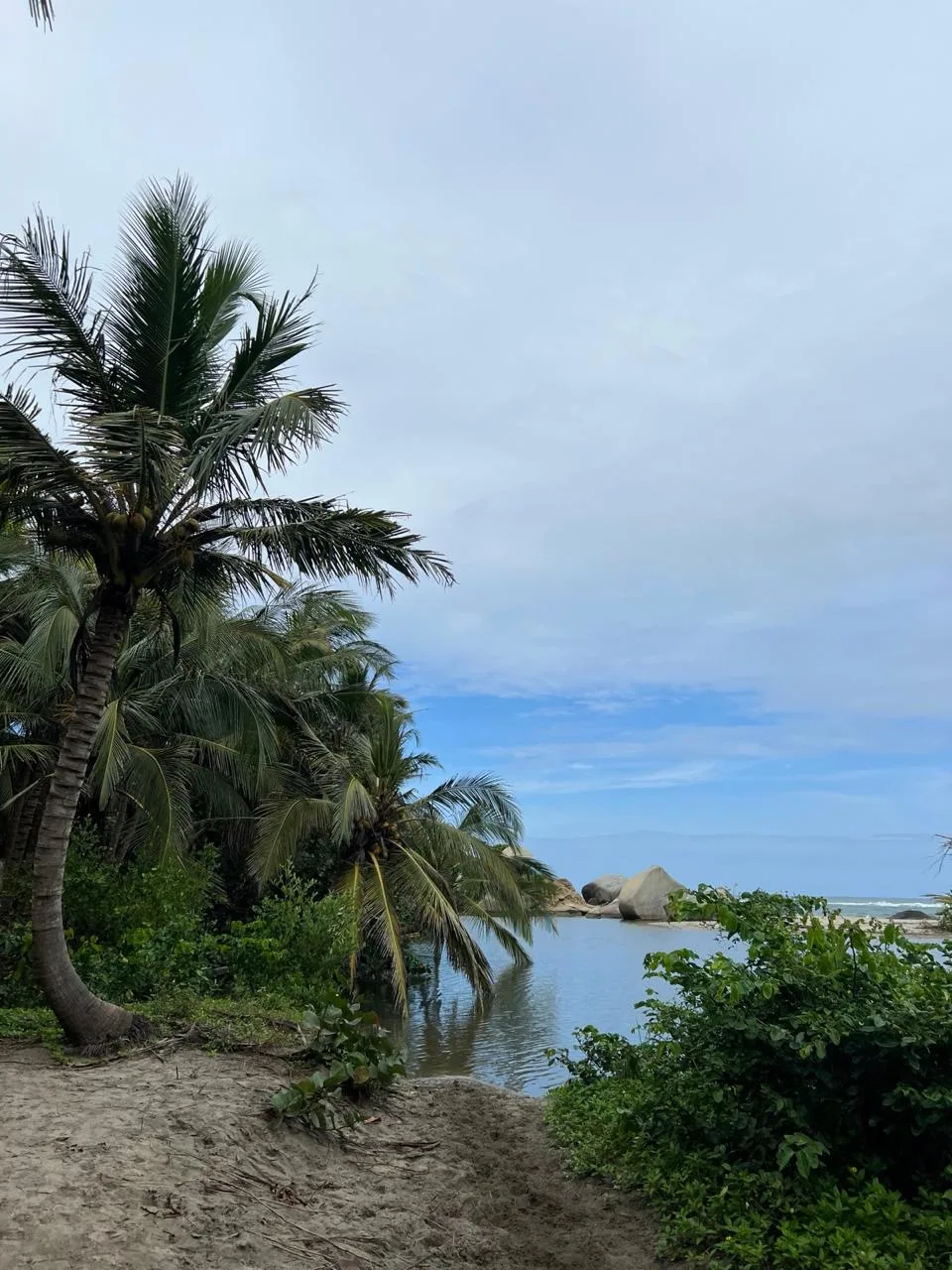
The History: Five Cultures, One Kitchen
Geography explains the ingredients. The way they’re cooked is another history.
The Indigenous foundations
The Indigenous foundations came first. For at least 5,000 years before the Spanish arrived, Carib-family peoples — the Zenú, the Mokaná — farmed the Caribbean lowlands. They grew yuca, corn, plantain, ají dulce, and squash. They cooked on clay griddles called budares, wrapped food in plantain leaves, fermented corn into chicha. When you bite into an arepa de huevo or a bollo in Cartagena today, you’re eating from a pantry that predates the Walled City.
The Spanish Arrived
Then the Spanish arrived in 1533 and rewrote the menu. Pedro de Heredia founded Cartagena de Indias, and within a century the city became the most important port of Spain’s northern South American empire. It was basically the gateway for gold, silver, and enslaved Africans. The Spanish brought cattle, pork, chicken, rice, onion, garlic, citrus, and panela (the unrefined cane sugar that would become the sweetener of everyday life). The entire dessert tradition of Cartagena — the cocadas, the alegrías, the caballitos sold at the Portal de los Dulces — runs on panela and the Catholic religious calendar that the Spanish imposed.
The third Force in Cartagena’s food.
The force that truly defined Cartagena’s cuisine came from Africa. This was the largest slave-trading port in all of Spanish America. By 1777, roughly 72% of Cartagena’s population was of African descent.
Culinary historian Diane M. Spivey has documented how enslaved Africans brought not just labor but culinary expertise, agricultural knowledge, and cooking techniques that fundamentally shaped the food of the Americas — a contribution that has been systematically overlooked for centuries. In Cartagena, this is not a footnote. It’s the main chapter.
The deep-frying technique that gives Cartagena its most iconic street food — the arepa de huevo, the carimañola, the patacón — is African in origin. Coconut milk as a braising liquid, one-pot rice cooking, the use of every part of the animal — all of it traces back to African communities who carried their food culture across the Atlantic and rebuilt it here, under conditions of brutal oppression, with whatever ingredients they could access.
Self-liberation and cultural retention went hand in hand. The formation of palenques, communities established by Africans who escaped into the forests and hills of the Caribbean, allowed many African culinary and cultural patterns to be preserved. San Basilio de Palenque, about 50 kilometers southeast of Cartagena, was founded around 1603 by Benkos Biohó, an escaped enslaved leader. It became the first officially recognized free African territory in the Americas. It’s a UNESCO Intangible Heritage site.
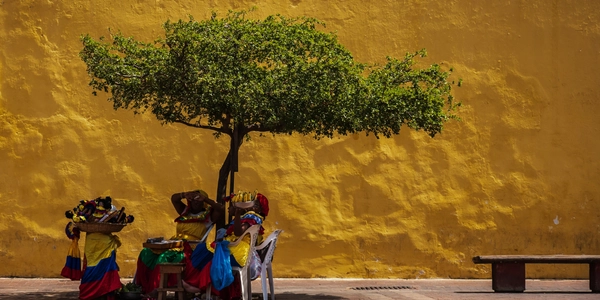
The Palenqueras you see selling fruit and coconut sweets on the streets of Cartagena today are the direct descendants of those communities. The fruit they carry on their heads is a living, edible line connecting the present to the freedom economy their ancestors built.
A migration almost nobody talks about.
Between 1880 and 1930, thousands of Lebanese and Syrian Christian families landed at the Caribbean ports: Cartagena, Barranquilla, Santa Marta. We have this thing in Latin America where we call everyone from that part of the world «turcos» — it’s not accurate (they weren’t Turkish, they just carried Ottoman passports), but the nickname stuck decades ago and at this point it’s not going anywhere. Neither did the food.
They were small in numbers, but their influence on the kitchen was quietly massive. Kibbe became street food, sold casually next to empanadas and carimañolas on the same trays, fully absorbed into the coastal diet without anyone calling it «foreign.» Tabbouleh appeared with local twists… sometimes with mango or avocado. Arab rice became a coast staple. As a fun fact… Shakira’s family comes from this community.
The Caribbean New Wave
For a long time, the story of Cartagena’s food was written entirely in the past tense. But there is a fifth force shaping the city’s tables in real-time.
Let’s call it the Caribbean New-Wave. A modern generation of Colombian chefs realized they were sitting on one of the most biodiverse, culturally layered pantries on earth. Instead of just repeating the classics, they started looking backward at their deep ancestral roots, and outward at the rest of Latin America.
This is a Pan-Latam dialogue using coastal ingredients. Take the sharp, acidic precision of a classic Peruvian ceviche, but rebuild it entirely with local sea snail, corozo , and creamy suero costeño. Chefs are venturing into the Montes de María and the dry tropical forests to forage forgotten native crops that even most Colombians have never heard of.
The result is a culinary movement that takes the unapologetic flavor profile of a humble street-corner fry stand and translates it into world-class fine dining. Restaurants like Celele are putting this philosophy on the global map.
What to Eat in Cartagena: Our Veredict on The Dishes You Can’t Miss
Each dish below is a cultural document. I’m listing them in the order I think makes the most sense for a first-time visitor: start with the street, move to the table, finish with the sweet.
Arepa de Huevo
A round corn-dough pocket, fried once to puff it open, split, filled with a raw egg, sealed back up, and fried a second time until the egg cooks inside. It sounds like it shouldn’t work but works perfectly (and taste great too).
This is the clearest single-bite summary of Cartagena’s DNA: corn from the Indigenous lowlands, egg from the Spanish pantry, double-frying technique from the African kitchen. Three cultures, one snack, eaten standing up at a corner stand before the sun gets too hot.
Carimañola
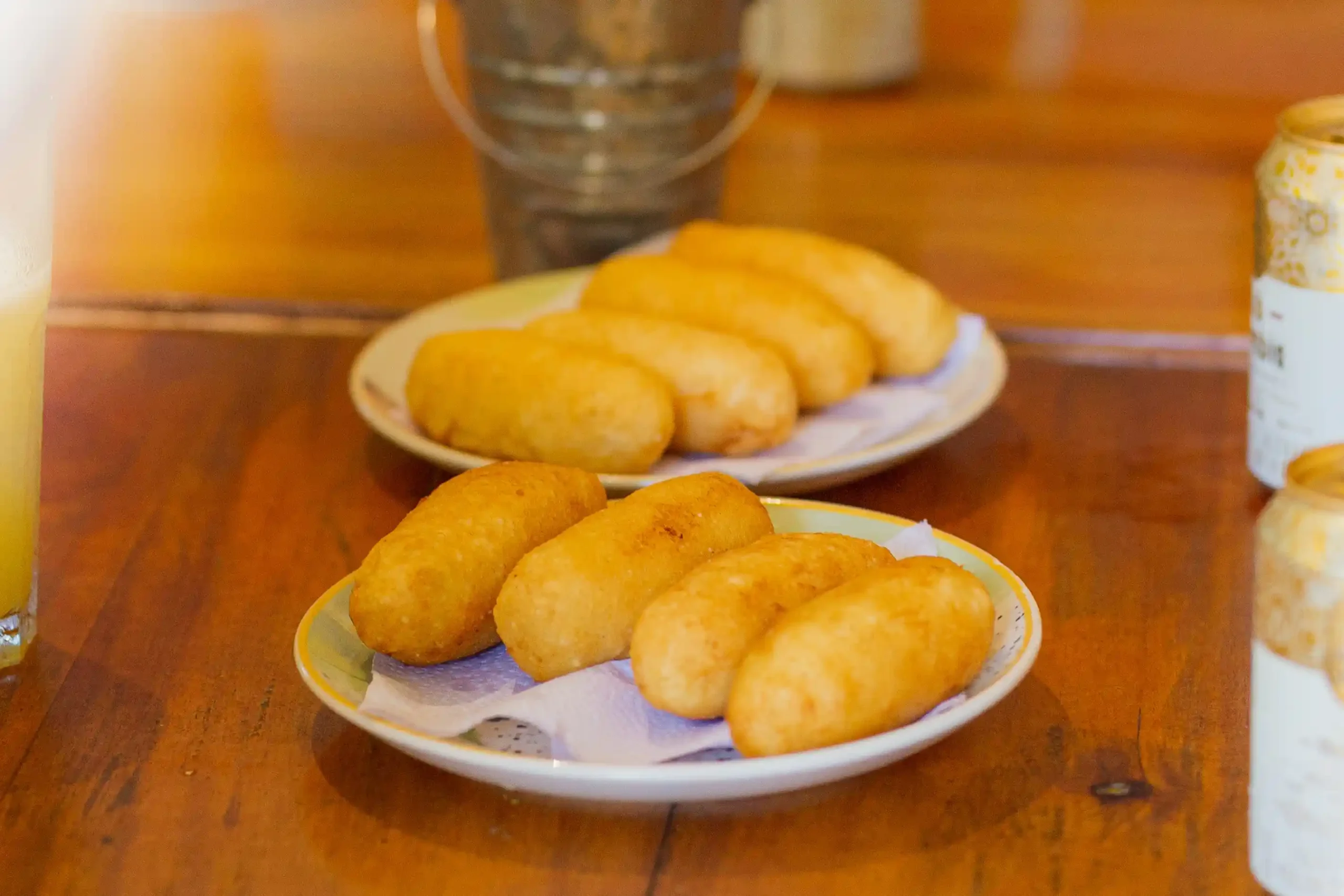
Think of it as the arepa’s cousin, but made with yuca instead of corn. A torpedo-shaped cassava-dough fritter, stuffed with seasoned ground beef or cheese, deep-fried until the outside cracks and the inside stays soft. So again… Indigenous ingredient, African technique, eaten at the same corners, at the same hours. The yuca vs. corn split runs through the entire Caribbean coast, and tasting both back-to-back is the fastest way to understand it.
Arroz con Coco (Coconut Rice)
There are two versions of this side dish (that could actually be a backbone of every plate). The white version is quick-cooked, lighter, coconut milk and rice and not much else. The titoté (brown) version is the one worth paying attention to: the coconut milk is reduced slowly until its solids caramelize to near-black before the rice goes in. It requires a lot of patience, but i really think it is worth it.
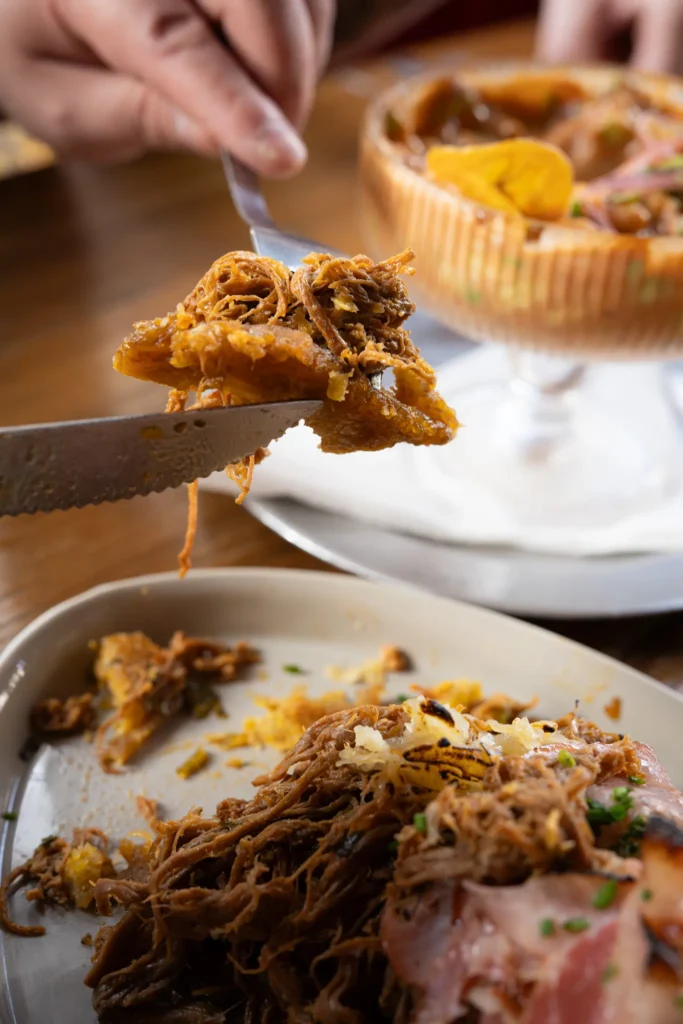
Posta Negra Cartagenera
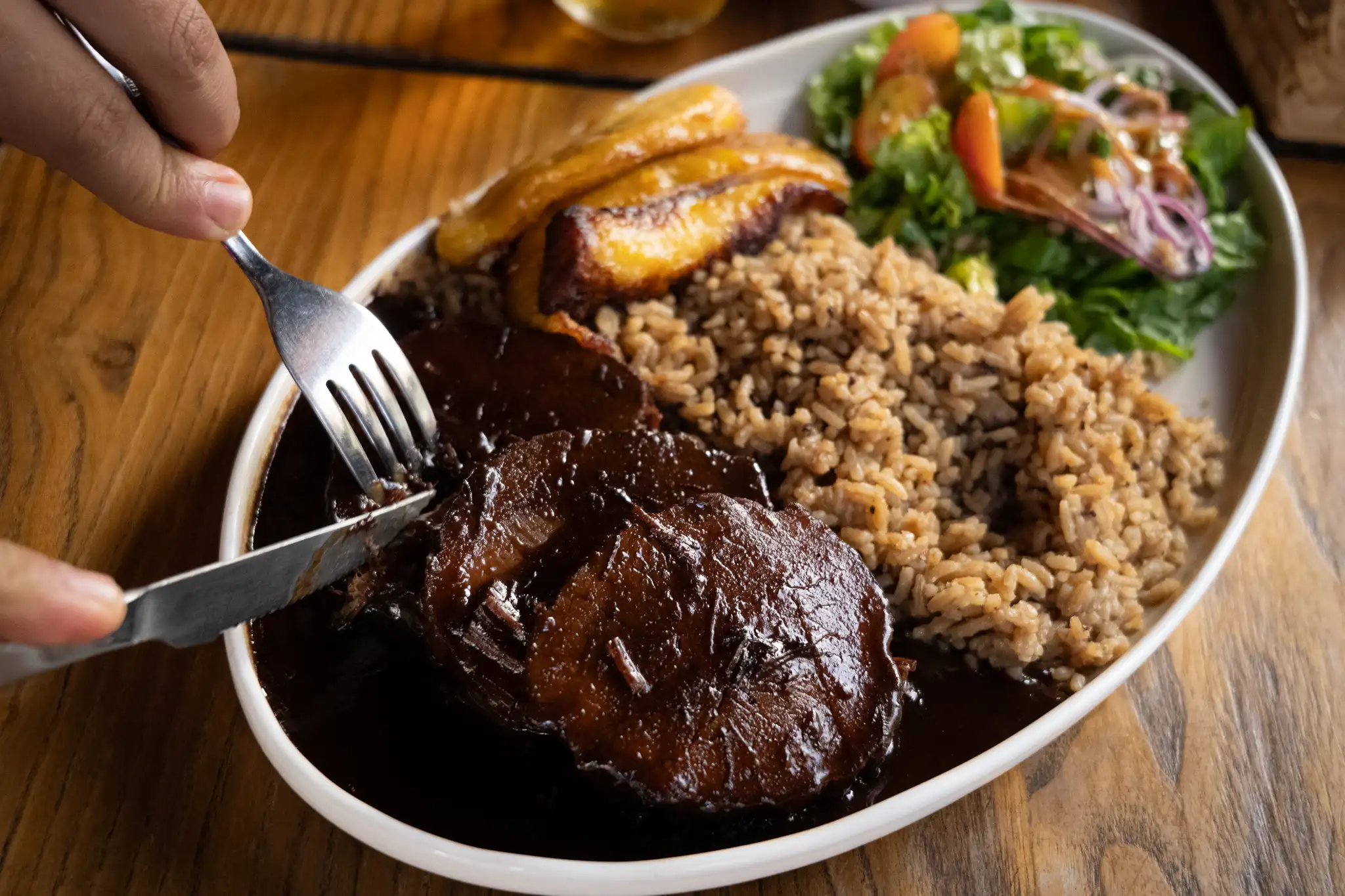
Beef — traditionally a tough, inexpensive cut like eye of round — braised low and slow in panela, Coca-Cola, tomato, onion, garlic, and spices until the outside caramelizes nearly black. It arrives glistening, sweet-savory, tender enough to cut with a spoon, always with coconut rice and patacón on the side. Despite being a heavy dish, and one whose ingredient list might raise an eyebrow or two — this is, for me, one of the best things you can eat in Cartagena.
This is the working-class dish that climbed the stairs. Like Osobuco in Argentina… Originally a way to make a cheap cut edible, it’s now on every upscale menu in the city.
Pescado Frito con Patacón y Ensalada
A whole fish — usually mojarra or pargo rojo (red snapper) — fried until the skin crackles and the fins turn lacy, served with salad or smashed, twice-fried green plantain (patacón) and a simple cabbage slaw with lime. This is the coast’s thesis statement: fresh catch, high heat, no fuss.
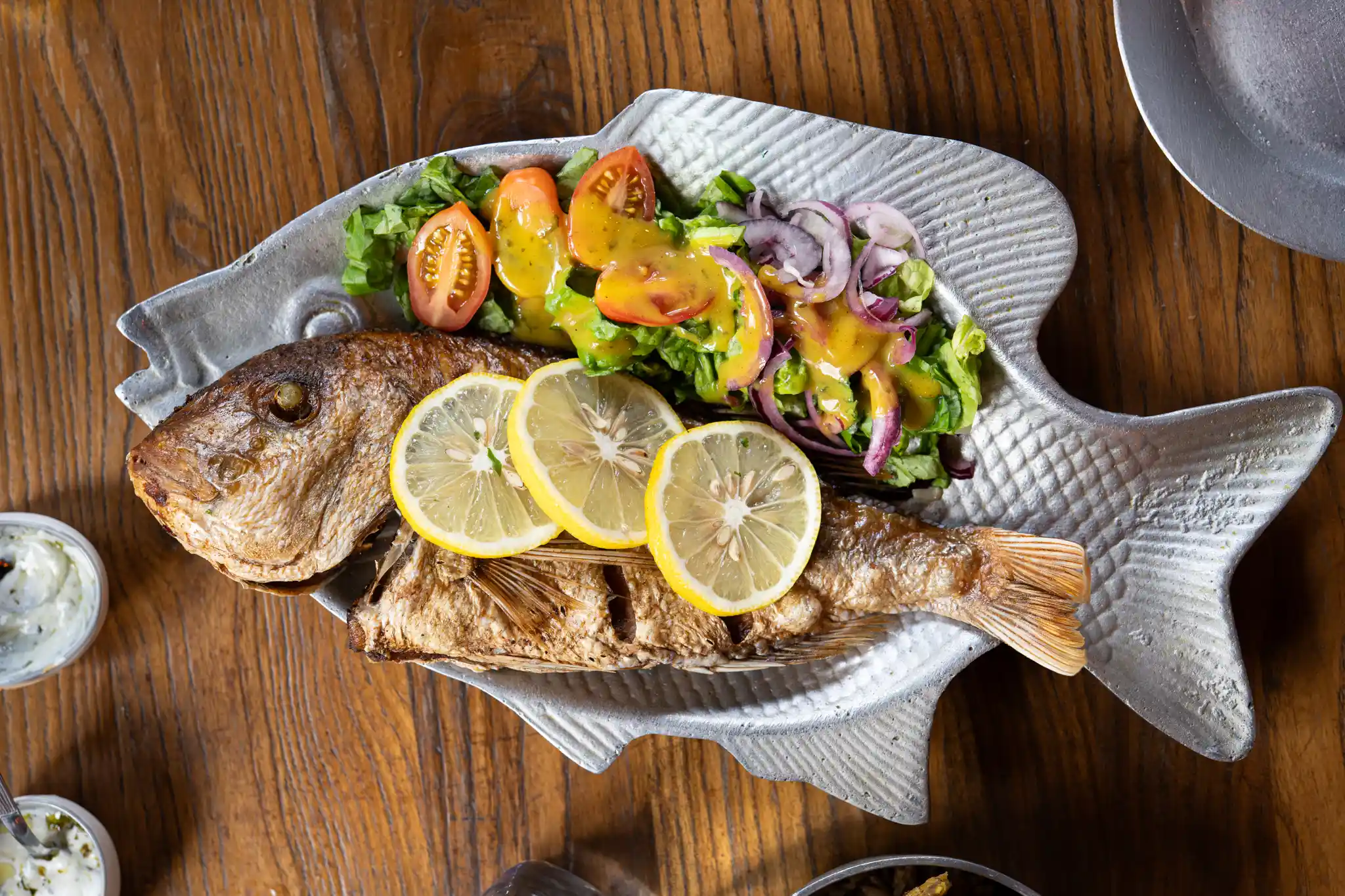
The patacón itself is an Afro-Caribbean technique found from Puerto Rico to Colombia: smash-and-re-fry green plantain. Eat the whole thing with your hands. Squeeze lime over everything. Use the patacón as your utensil. Start at the collar and tail for the most flavor. Watch for bones!!. Ask for «bien tostado» if you want extra crunch (that’s how i actually order it).
Ceviche Cartagenero
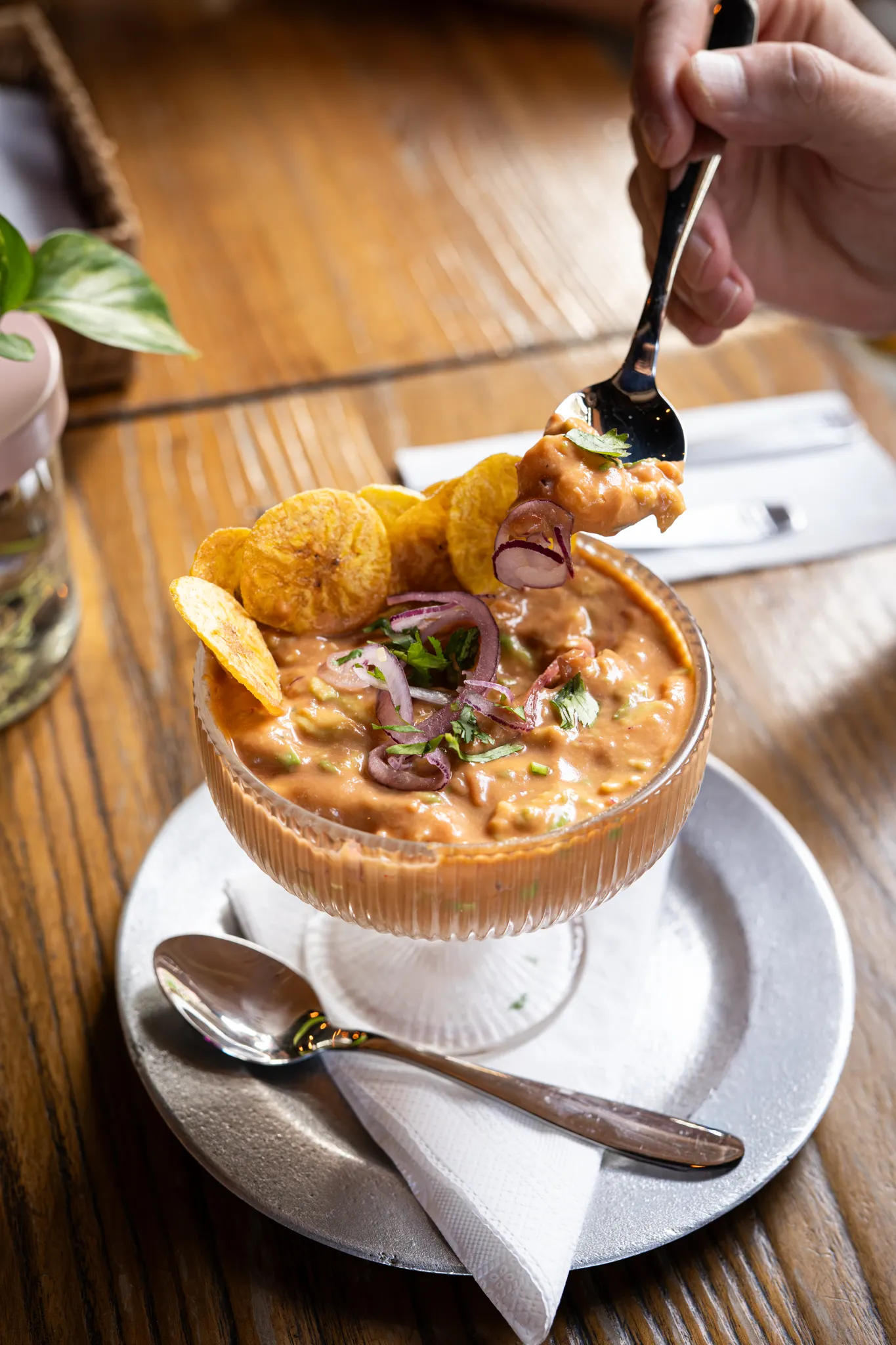
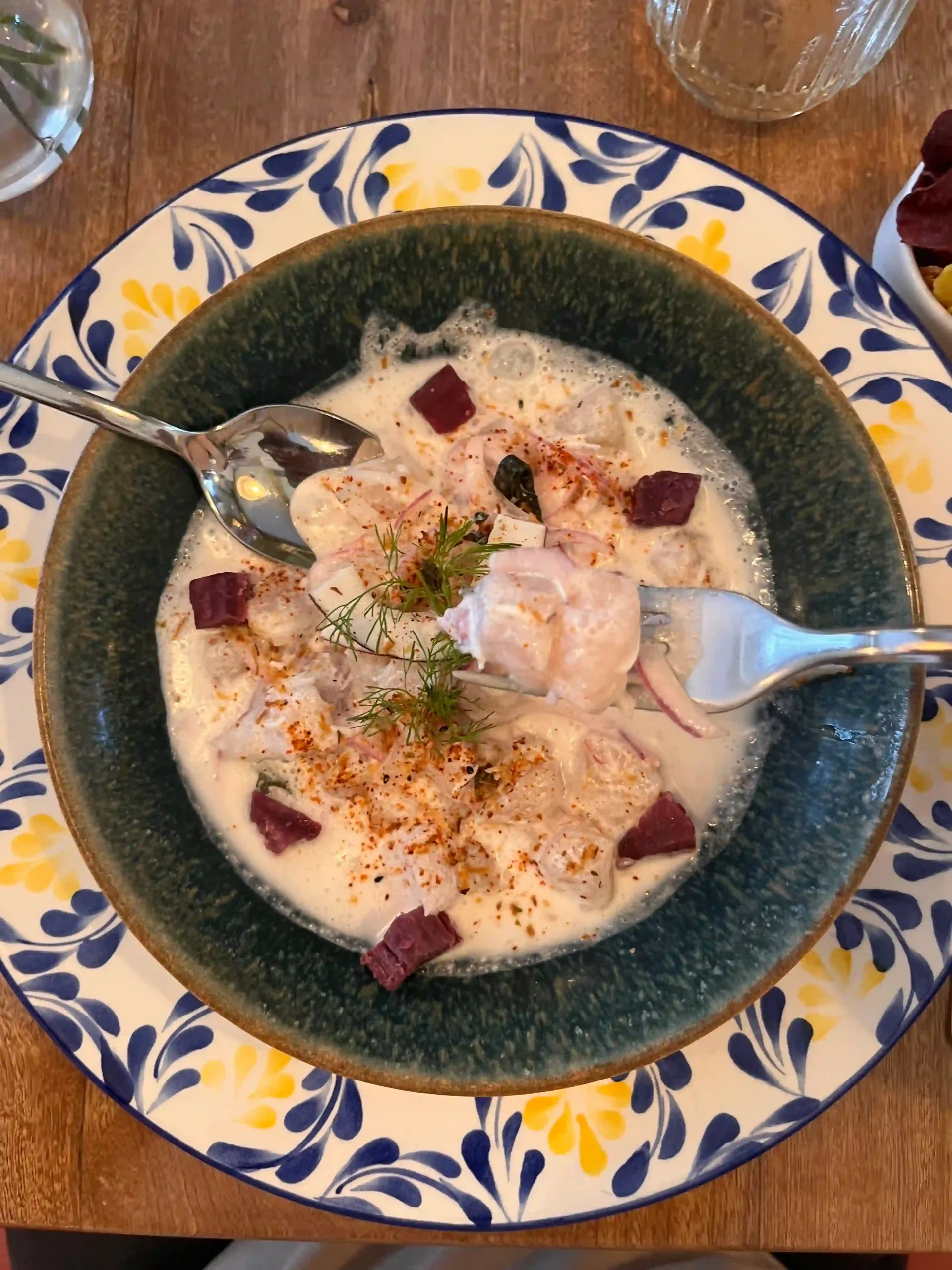
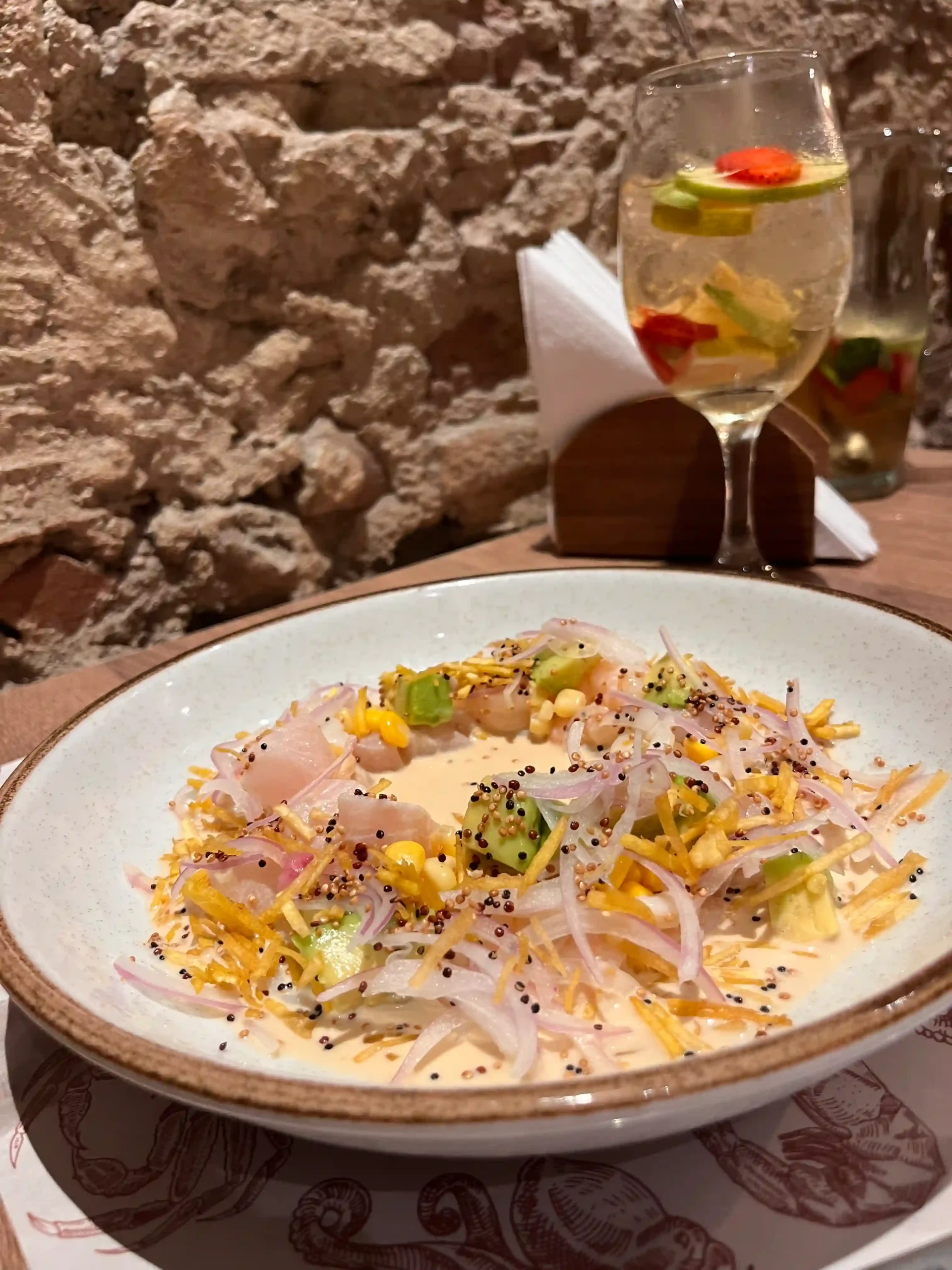
Forget everything you know about Peruvian ceviche!!! This is something else. It wouldn’t make sense to compare them cause they are just too different… Cartagena’s version is saucy, generous, often built on a base of ketchup and mayo (yes, really), loaded with shrimp or mixed seafood, lime, cilantro, and red onion. It’s more cocktail than cure, more comfort than precision.
The logic is Caribbean abundance: more sauce, more seafood, more flavor, more everything.
Sancocho de Pescado
A thick, slow-cooked fish stew with yuca, ñame, plantain, and coconut milk. This is Sunday food, family food, the pot that’s been going since morning.
The one-pot stewing logic is African in its deepest roots. The tubers are Indigenous. The coconut milk is the Caribbean twist. And the whole thing is served with rice on the side, because in Cartagena, there’s always rice on the side.
Kibbe Costeño
I love this one… A fried, football-shaped croquette of bulgur wheat wrapped around seasoned ground beef — the coastal Colombian version of Lebanese kibbeh, with beef swapped in for lamb.
It sits on the same street-food trays as empanadas and carimañolas. Most locals don’t consciously think of it as «foreign» anymore. It’s been fully absorbed into the coastal diet.
Pan de Bono
As confusing as it sounds, it’s called bread, but there’s no flour in it. Pan de bono is made with cassava starch, fresh cheese, eggs, and sometimes coconut (i know it sounds like there’s coconut everywhere.) It is soft, warm, slightly chewy, with a subtle sweetness that makes it dangerously easy to eat three in a row without noticing (guilty).
Cocada, Alegría & the Sweets of the Portal
The cocada is the one you’ll try first: grated coconut slow-cooked with panela until it turns dense, chewy, and impossible to eat just one of. Some versions fold in pineapple, guava, or passionfruit. Then there’s the alegría, which is popped millet or amaranth held together with panela syrup. It is crunchy, sweet, and yes, the name literally means «joy» (draw your own conclusions).
In Cartagena you’ll also find caballitos (candied papaya that melts on your tongue), bolas de tamarindo (tamarind paste rolled in sugar, tart and sticky), and enyucado — a baked cake of yuca, coconut, and anise that comes straight from the Palenque kitchen. That last was not my favourite but i would say it is worth trying it!
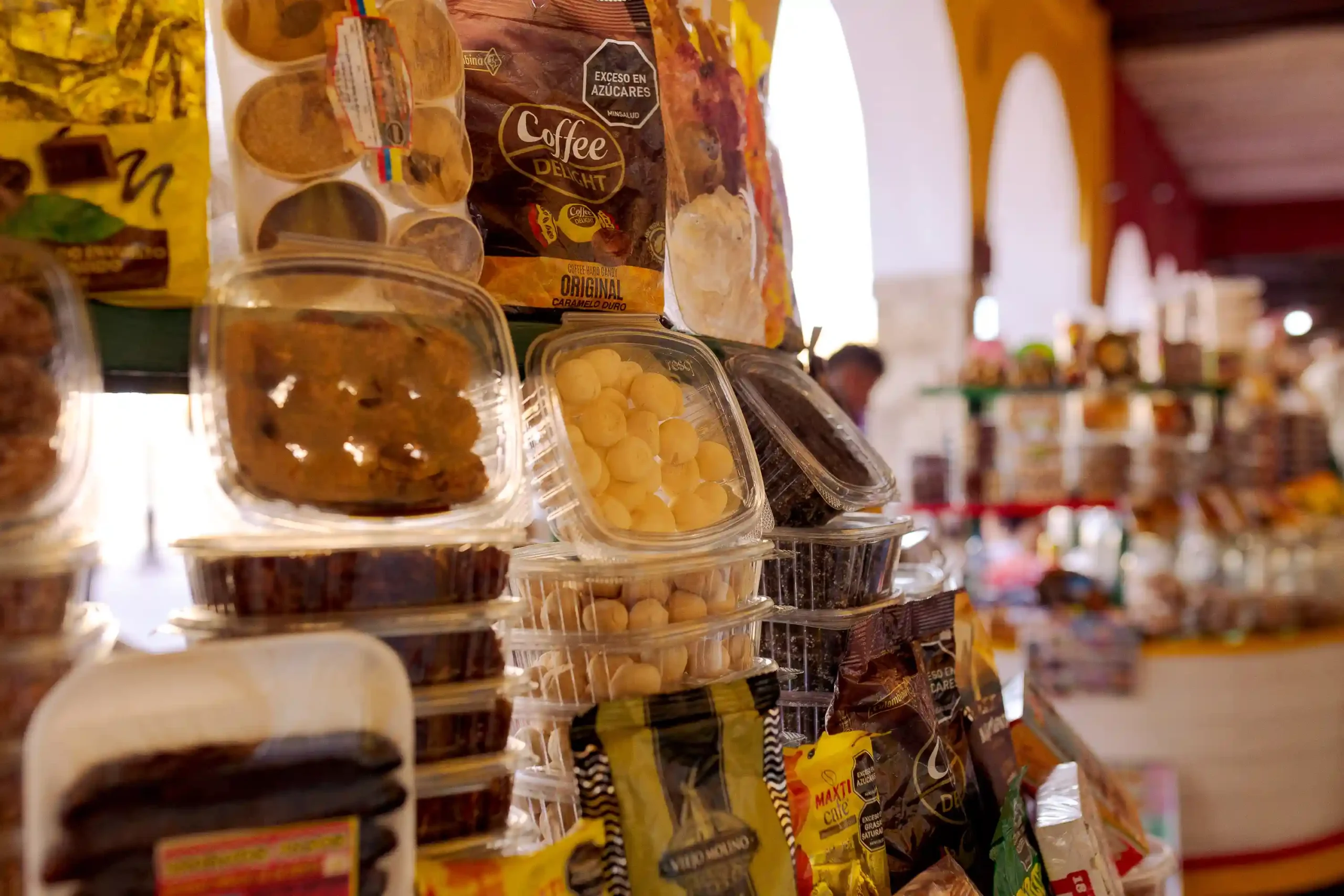
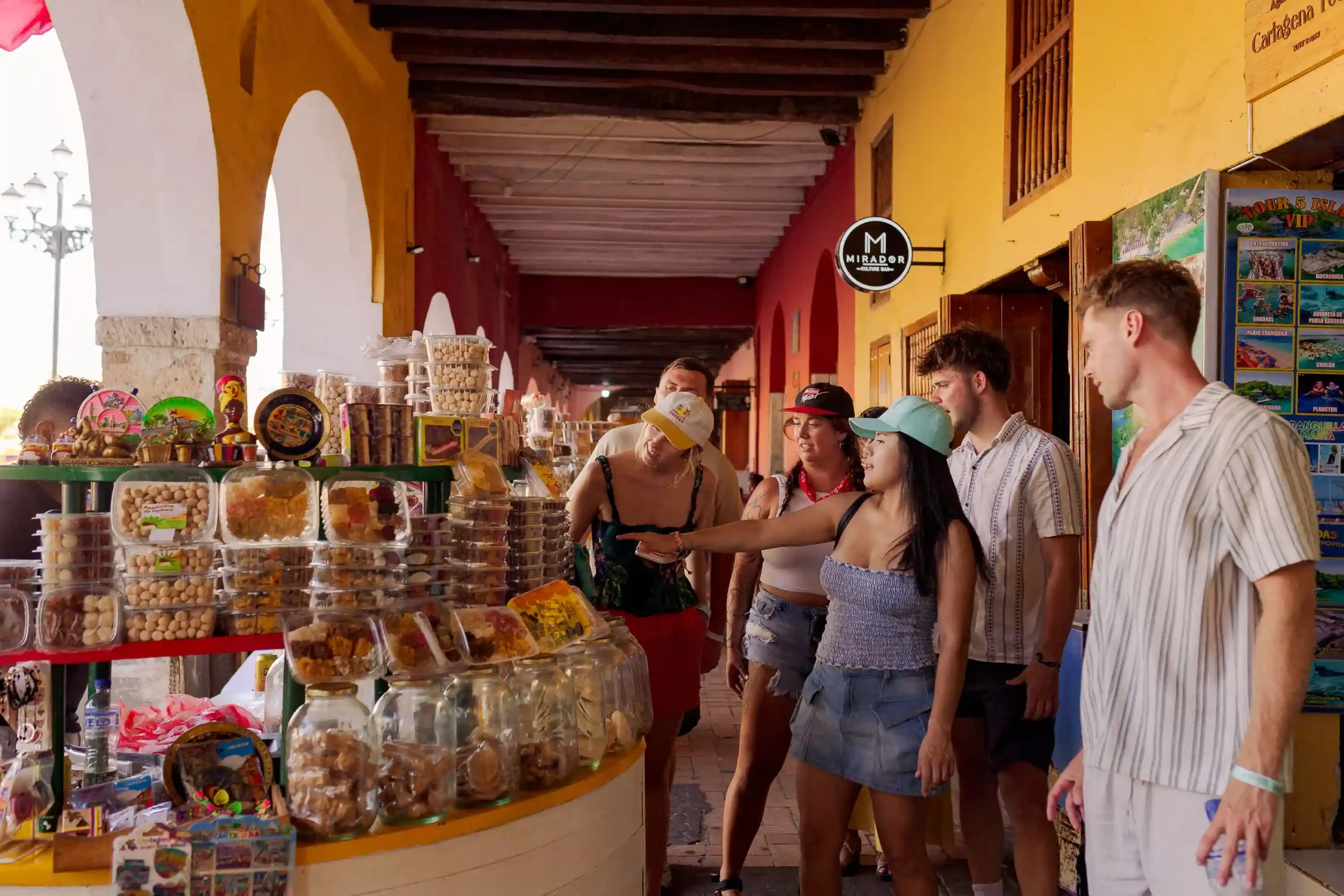
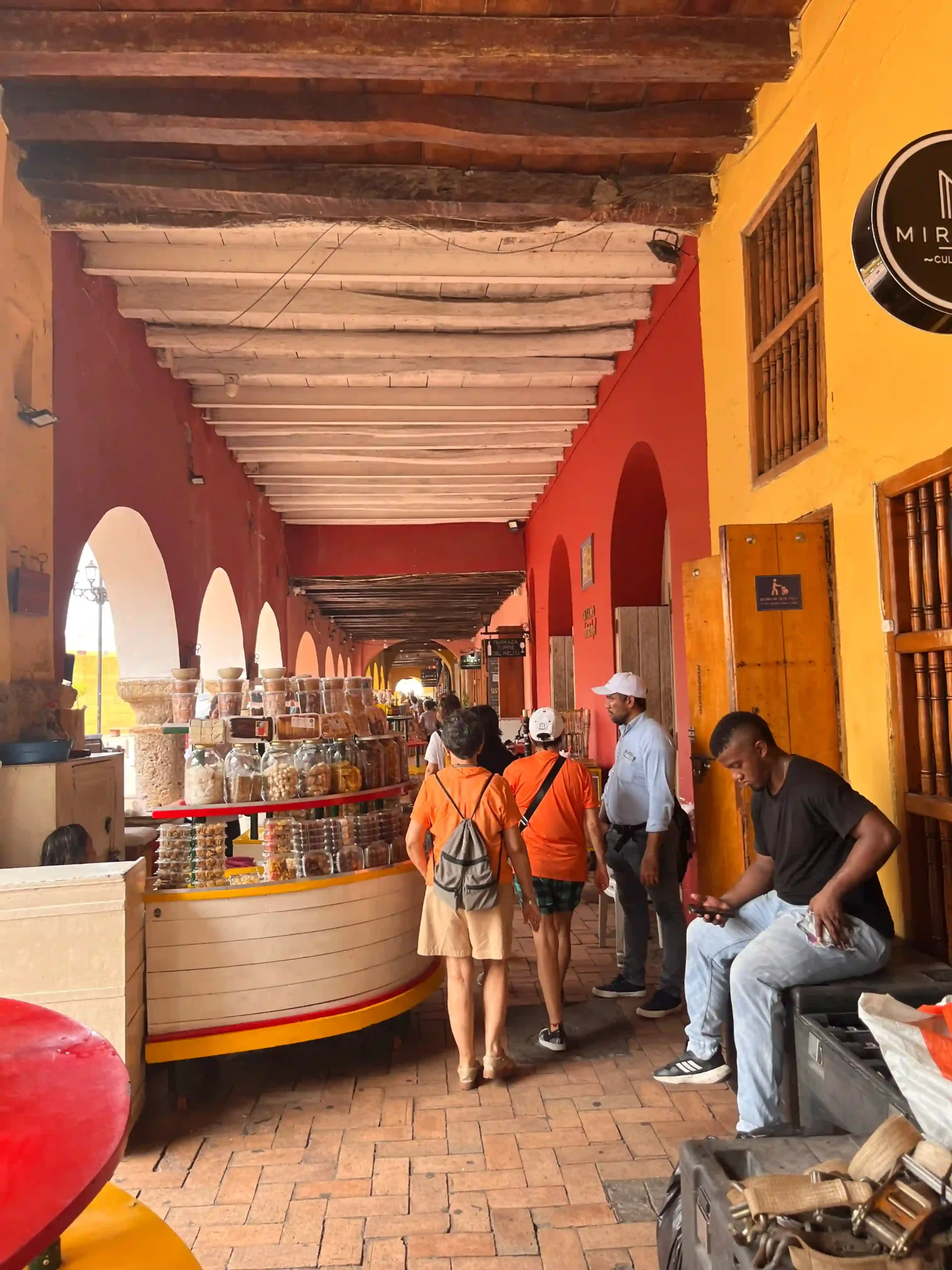
The entire dulce tradition is an African women’s economy. After abolition, Black women in Cartagena turned sweet-making and selling into their own livelihood. The Portal de los Dulces — the arcade where many of them sell today — was once the Plaza de los Esclavos, where enslaved people were sold. It was reclaimed by their descendants, who now sell sugar from the same arches (I love the irony and reclamation behind that). Buy from a palenquera when possible. And buy more than you think you need — you’ll want them later.
Fruits in Cartagena: The Tropical Pantry You’ve Never Seen
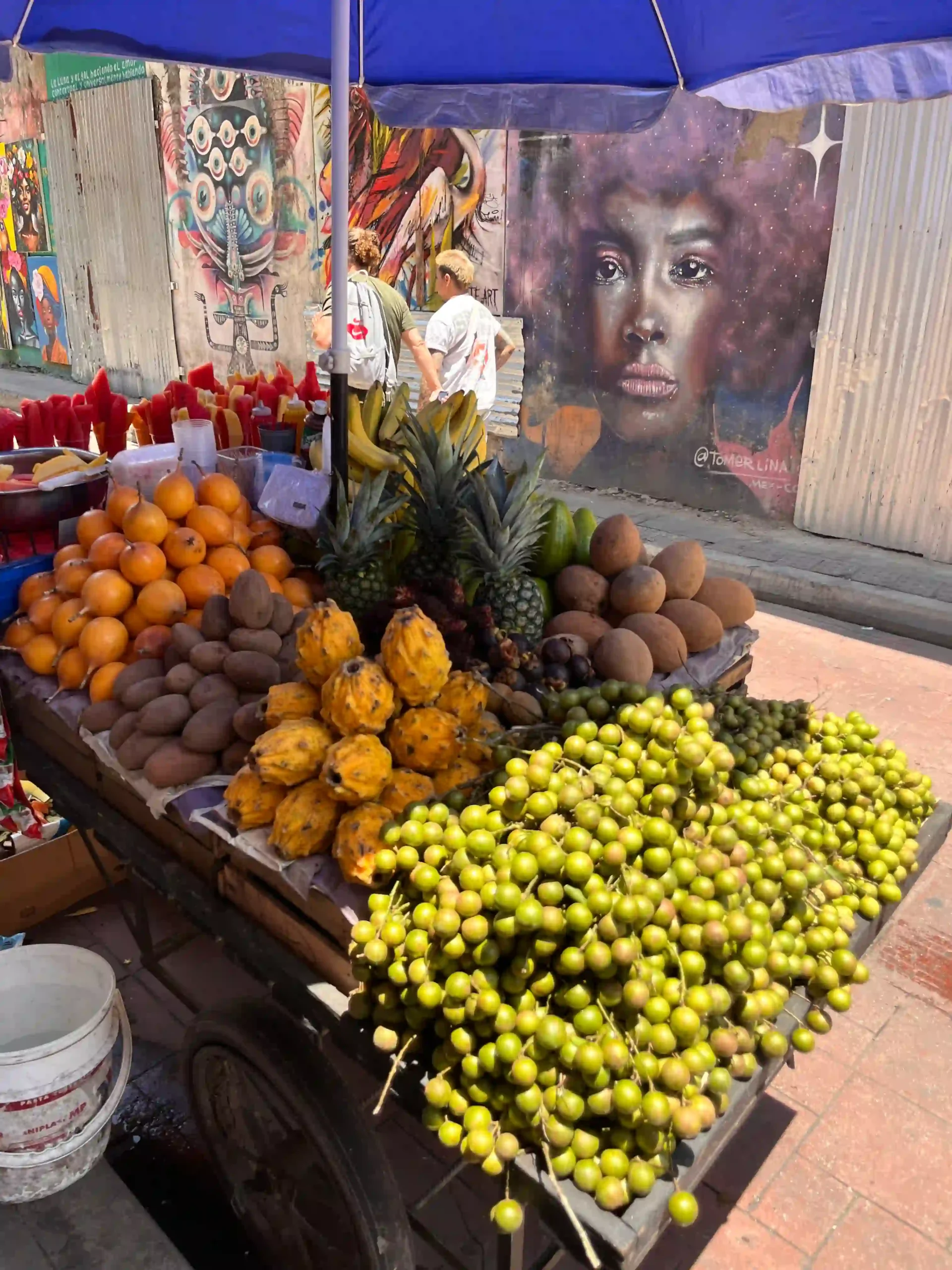
Colombia has over 400 (!!) native fruit varieties. In Cartagena, you’ll encounter dozens you’ve never heard of, and most of them don’t exist outside this part of the world. The fruit pantry is one of the city’s strongest sensory assets: biodiverse, photogenic, and genuinely surprising for anyone whose fruit vocabulary stops at mango and papaya.
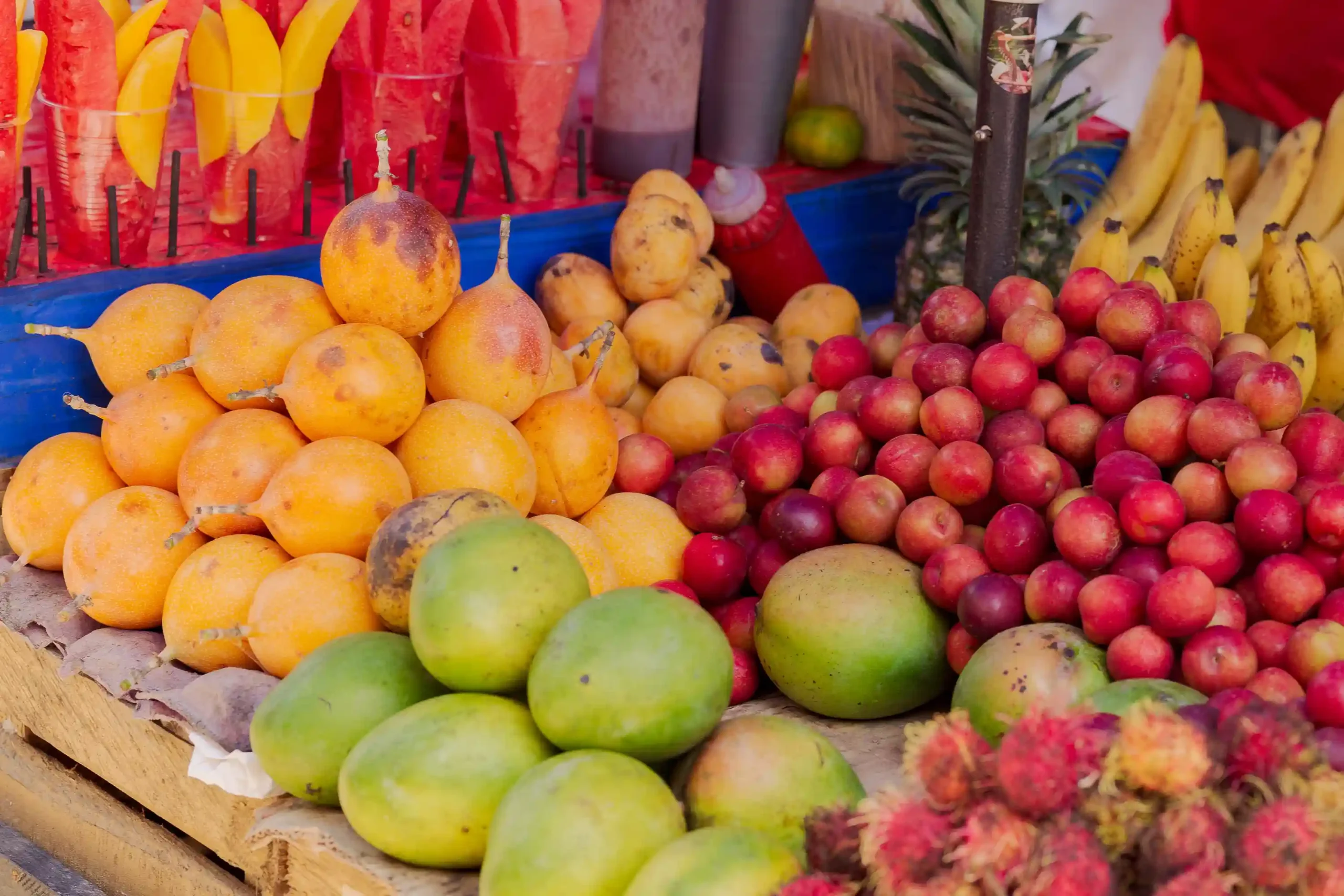
My favourites to look for:
Corozo: it is a Small, deep-purple palm fruit that made into a juice tastes like tart cherry crossed with red wine. Also the base of several craft cocktails in the city’s bars.
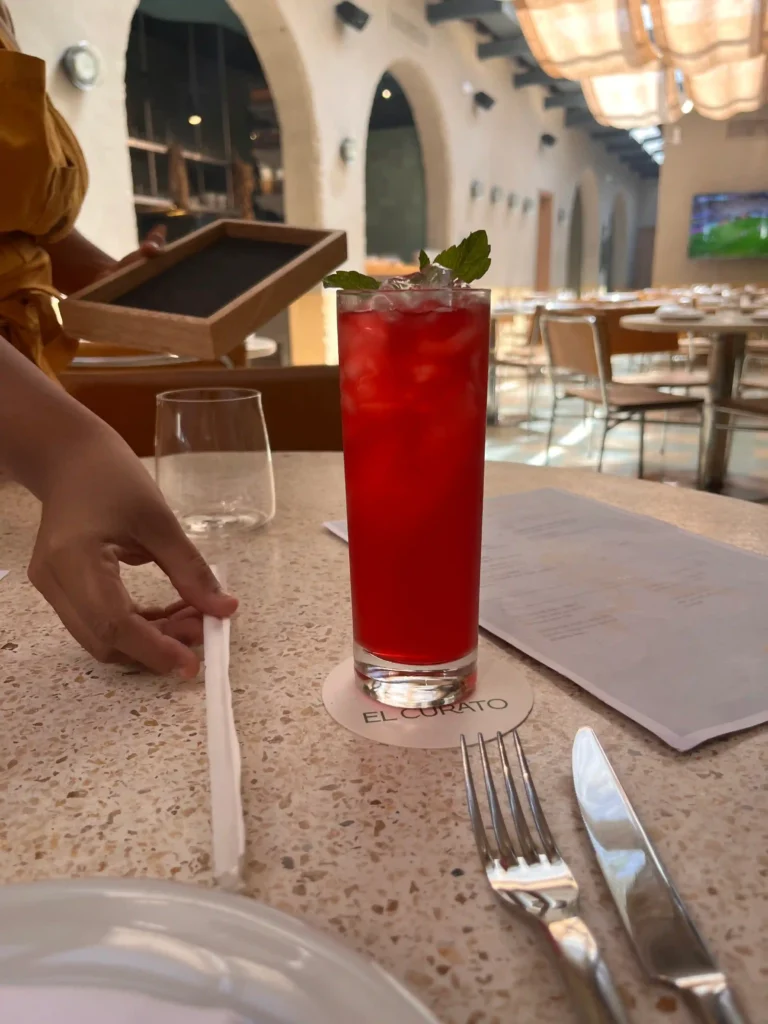
Níspero: Creamy, dense, caramel-sweet. The kind of fruit that makes you question why it doesn’t exist in your country.
Mamoncillo: The shell looks like a lime and cracks open between your teeth to reveal a translucent, slippery pulp wrapped around a big seed. The texture might catch you off guard — to me it’s similar to a lychee, soft and gelatinous — but the flavor is tangy, and weirdly addictive. You suck the pulp off the seed and toss the shell. Then you grab another one. Then another. Honestly, this one was my favorite.
Lulo: Let’s say somewhere between a tomato, an orange and a lime. It’s used to make (add it to your must-try list).
Tamarindo: i didn’t like this one, but kinda have to add it to the list because it is turned into candy (bola de tamarindo) at the Portal de los Dulces and into juice at practically every lunch spot. So, give it a try!
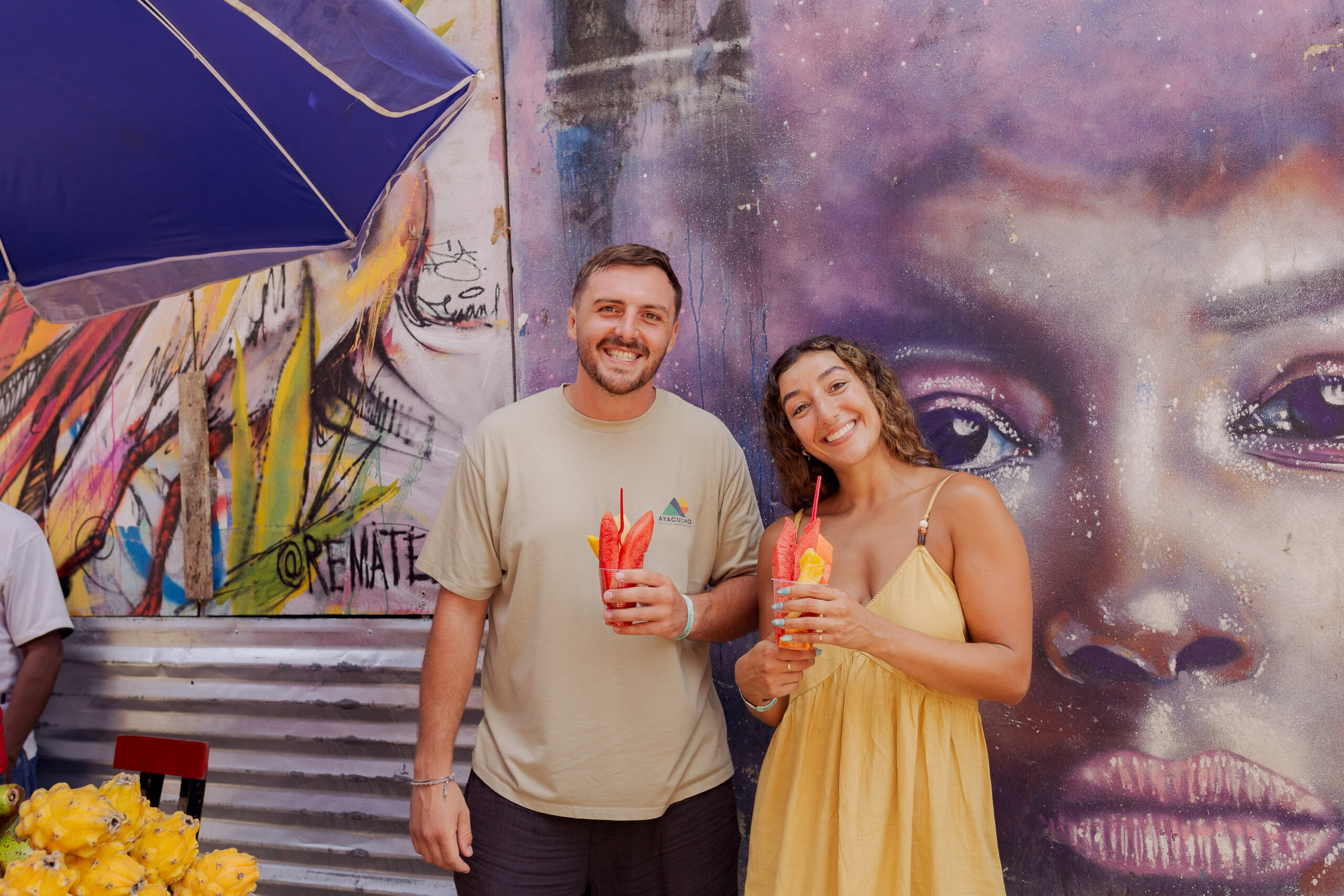
Mango verde con sal y limón: Green mango, unripe, cut and served with salt and lime. This is a costeño obsession. If you see someone selling it from a cart, stop!
Maracuyá (passionfruit), guayaba (guava), zapote, caimito, borojó: The broader Colombian tropical pantry crossing into Cartagena’s kitchen.
The best way to encounter most of these is through a Palenquera. It’s one of the most Cartagena things you can do.
What to Drink in Cartagena
Everyday drinks
Limonada de coco: Easy… coconut milk, lime, sugar, ice. The signature non-alcoholic drink of the city. Make yourself a favour and order it everywhere.
Aguapanela con limón: Panela, dissolved in water, served hot or cold with lime. The everyday energy drink of Colombia. Simple, cheap, everywhere.
Jugo de corozo: Tart, deep purple, refreshing. If it’s on the menu, order it!
Kola Román: Cartagena’s local cherry-red soda. Sweet, fizzy, nostalgic for the Cartageneros… Not objectively better than any other soda, but culturally important.
The Spirits
Aguardiente: The Colombian national spirit. Anise-flavored, sugarcane-based, and pretty strong… It’s taken as a shot, usually with a group, usually with a toast. This is what i would call a ceremony drink, birthdays, holidays, and any Tuesday that feels like it needs one.
Ron: Ron Medellín, Ron Viejo de Caldas. More Caribbean in spirit than aguardiente. Sipped neat, mixed with Coca-Cola, or used in cocktails. This is the coast’s preference over aguardiente, though both coexist.
Cartagena’s Food Formats: Where to Eat What
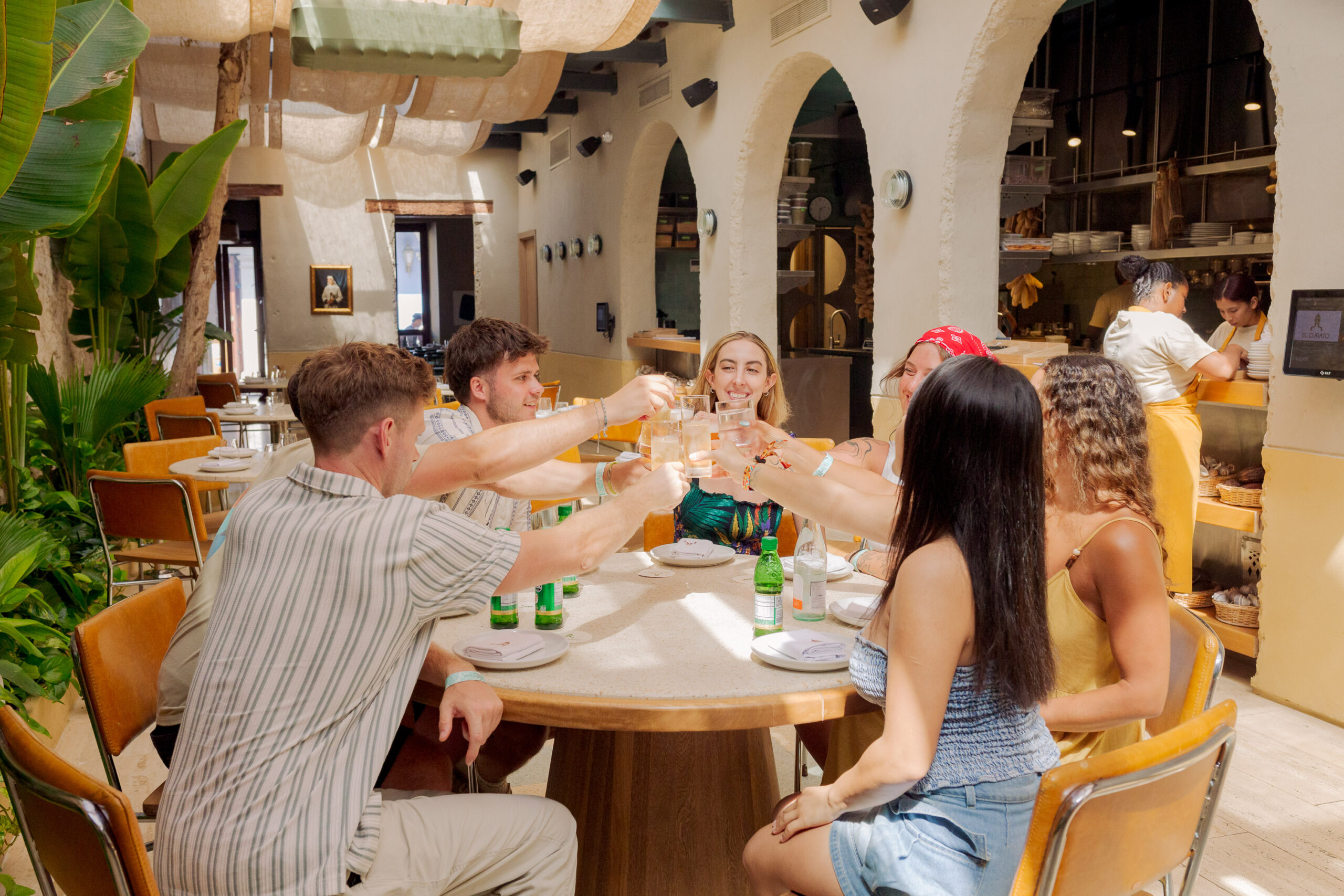
One of the most common mistakes visitors make with food in Cartagena is treating it like a restaurant city. It’s not. Cartagena is a street city, a market city, a stand-on-the-corner-with-oil-on-your-fingers city. Yes, there are outstanding restaurants (that we actually go to!). But the heartbeat of Cartagena’s food culture lives in the archetypes below, and knowing them before you arrive means you’ll eat better, spend smarter, and understand the city faster.
Frutería Callejera / Palenquera Stand
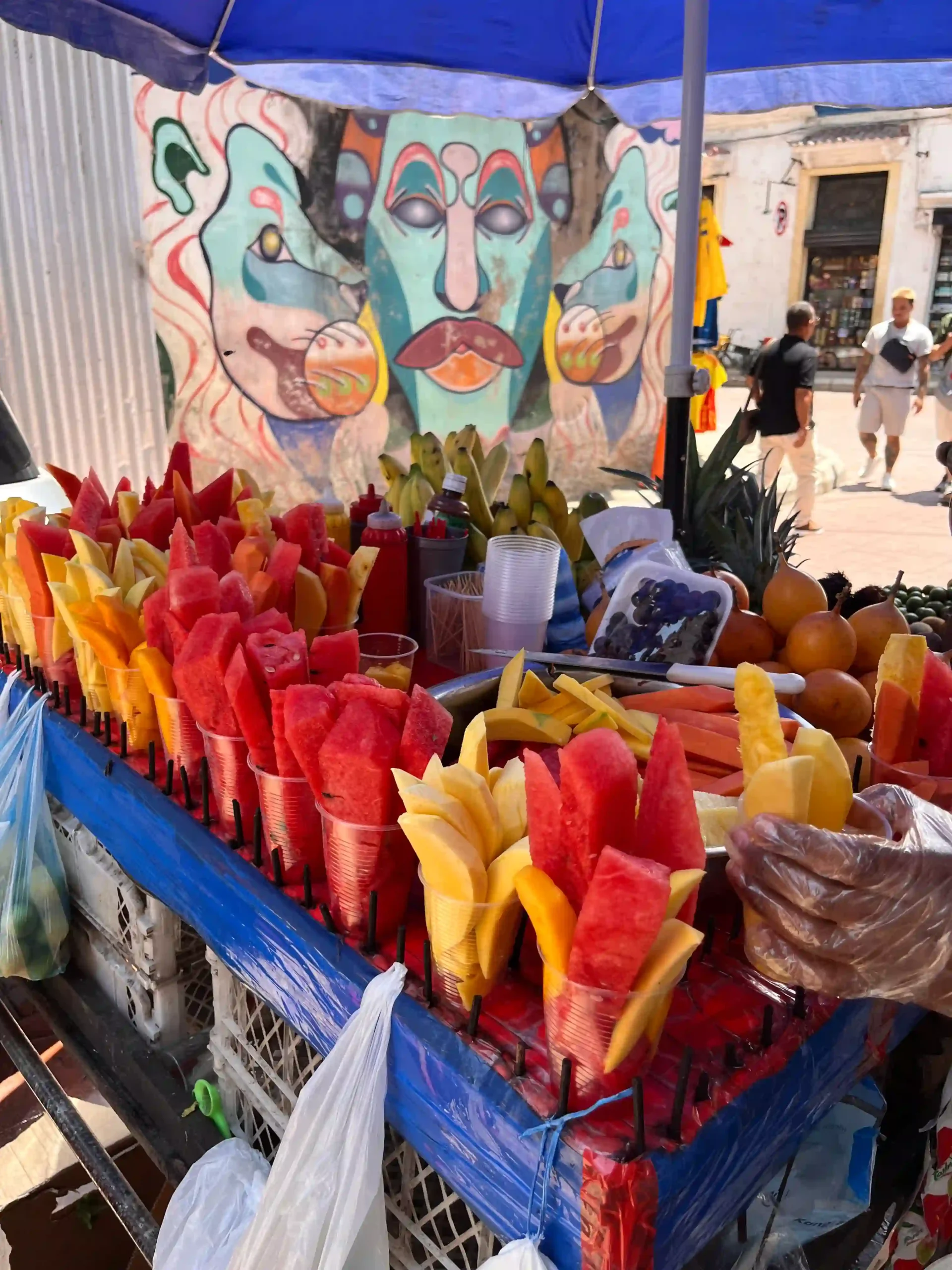
As i said before, The Palenqueras (in brightly colored dresses carrying trays of tropical fruit on their heads) are the living face of the city’s African heritage. They sell fresh-cut mango, corozo, níspero, guanábana, mamoncillo, and all the fruits i mentioned before. Some sell cocadas and coconut sweets alongside the fruit. You’ll find them in the Walled City plazas, especially in the morning.
Puesto de Fritos (The Fried-Food Corner)
A corner stand, a woman or a family, a vat of oil, and a lineup of golden things: arepa de huevo, carimañola, empanada, deditos de queso. You eat standing up, with ají sauce and suero costeño dripping down your wrist, ideally before 9 AM or after 10 PM. Budget around 2,000–5,000 COP per piece (roughly $0.50–$1.50USD). #SherpaTip If the oil is fresh and the line is local, you’re in the right place.
Cevichería Cartagenera
The best cevicherías tend to be small, loud, and packed at midday. Some have been in the same spot for decades. Two that stood out to me: Sierpe Caribe Fusión and Sambal Bistró Caribeño, both in Getsemaní.
Picada de Mariscos / Mesa Costeña
The shared seafood platter, piled with fried fish, shrimp, patacones, coconut rice, and whatever the sea brought in that morning. Love this one! This is the most social way to eat in Cartagena: a big tray in the center, everyone reaching in, nobody keeping track of who had what. If you’re traveling with a group, this is your archetype.
Restaurante Criollo
This is where you sit for a proper meal and eat the formation story of Caribbean Colombian identity. Posta negra with coconut rice and patacón. Whole fried fish with salad… The setting is usually a colonial courtyard, sometimes with live music, often with a palenquera greeting you at the entrance. These restaurants are rooted.
New-Wave Caribbean Cuisine
This is where Cartagena stops being «rustic» and starts being «ranked.» Celele, #5 in Latin America’s 50 Best, #48 globally, and winner of the 2025 Sustainable Restaurant Award, is the standard-bearer. Chef Jaime Rodríguez spent two years traveling the Colombian Caribbean coast documenting endangered ingredients and ancestral techniques, and turned them into tasting menus that honor where they came from. The movement includes Rabo de Pez, Carmen, Alma, and 1621. You don’t need to eat at Celele to feel the effect.
Fritanga (The Loud Fried-Food Corner)
Sounds repetitive but this is not the same as the puesto de fritos. this is the bigger, louder, later version. Chicharrón, patacón con todo (a massive plantain disk loaded with meat, cheese, and sauces), chorizo, butifarra. Cheap, smoky, real. This is where Cartagena eats after dark, where the line between dinner and street snack disappears, and where the soundtrack is champeta, salsa, or whatever’s coming out of the nearest picó sound system. Not the most refined stop, but arguably the most honest one.
Portal de los Dulces
Not a restaurant, but definitely a food venue. An open-air arcade in the Walled City where women sell handmade sweets: cocadas, alegrías, caballitos, bolas de tamarindo, enyucado.
Mercado Bazurto
Cartagena’s central market, roughly 4 kilometers from the Walled City. This is where chefs buy their fish at dawn, families do their weekly shopping, and the city eats without performing for anyone. Chaotic, sweltering, loud. Fried fish stands, fruit mountains, ceviche stalls that have been open for 50 years… This is not a tourist-friendly market, it requires navigation and ideally a local guide. But if you want to see where Cartagena’s food actually comes from, Bazurto is the unfiltered version.
Rooftop Bar / Craft Cocktail Spot
Cartagena’s cocktail scene runs on native fruits mixed with local spirits. Selva Gin, distilled in Cartagena with corozo, fermented cacao, and limón mandarino, is the standout craft product. Aguardiente and rum are ever-present. The best cocktail bars tend to be in the Walled City or Getsemaní, with rooftop views that turn sunset into a closing ceremony. This is where a great food day ends, drink in hand, old city walls glowing, the story landing.
Getsemaní: Where the Real Cartagena Eats
Most visitors to Cartagena spend their time inside the Walled City, and it’s beautiful, undeniably. The colonial architecture, the balconies, the bougainvillea, the plazas, and of course the history… But if you only eat inside the walls, you’re getting a partial version. The raw, vibrant, living version is next door.
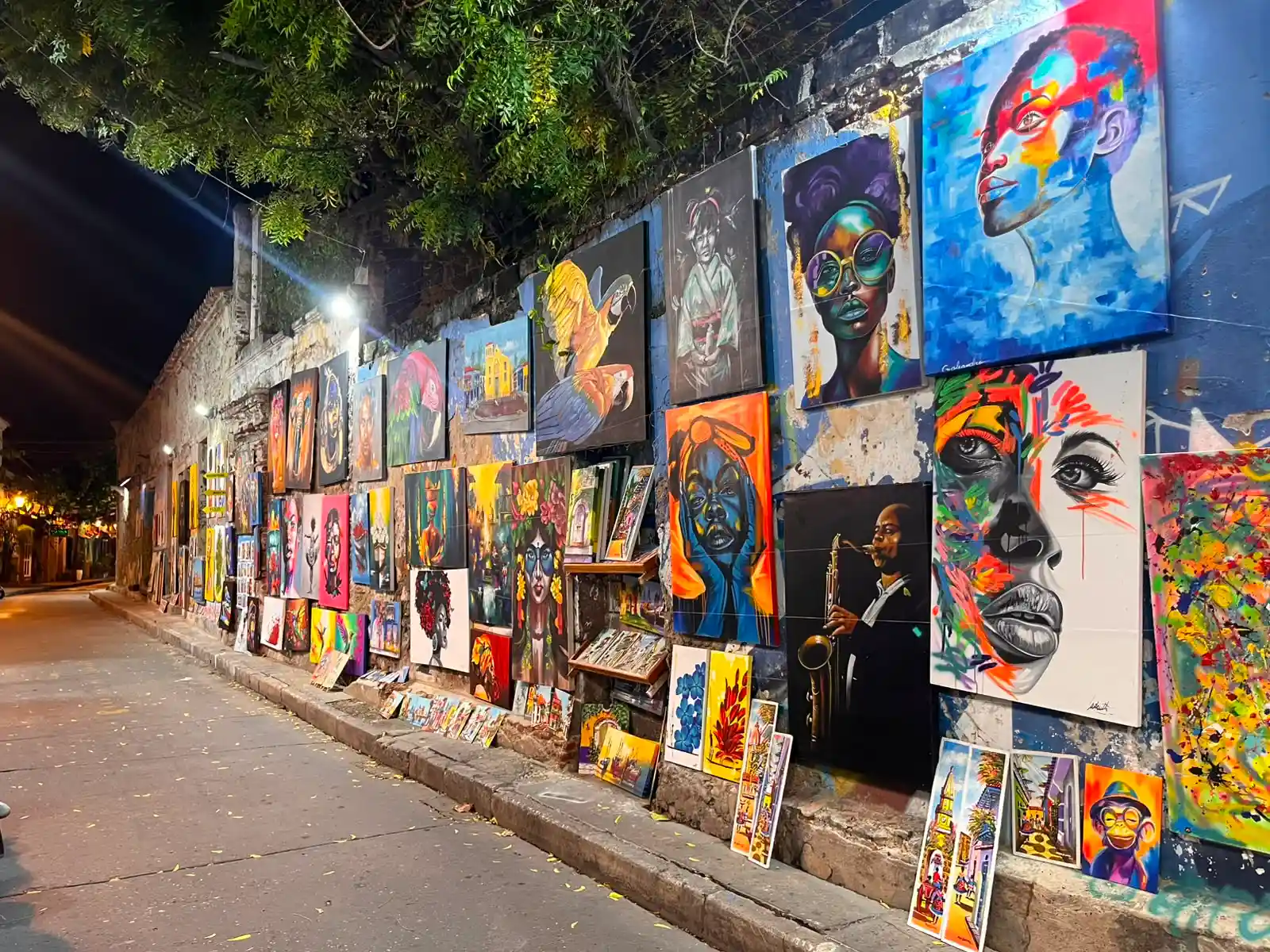
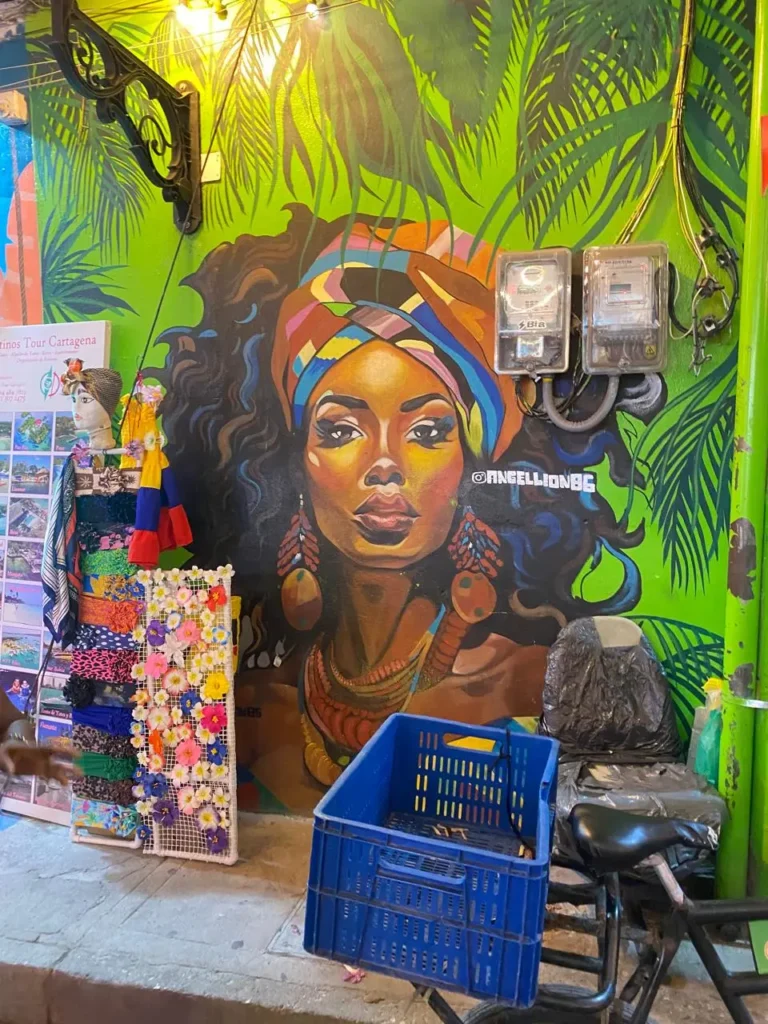
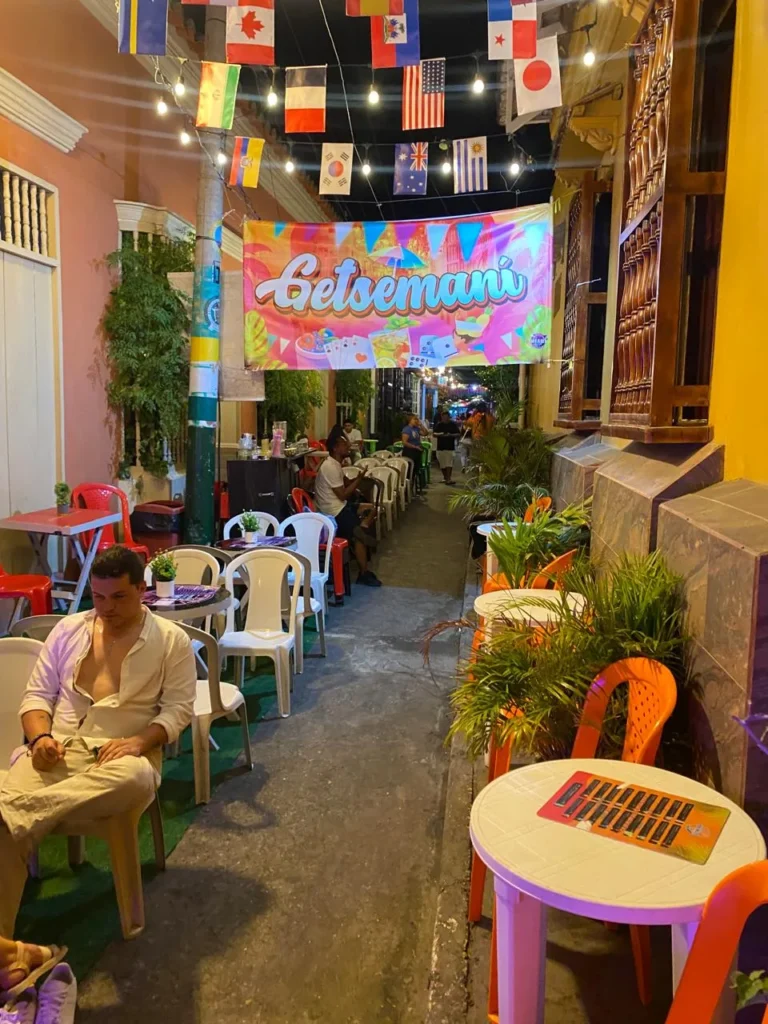
Getsemaní hits you with color first. Murals on every surface: not decoration, but storytelling. Afro-Colombian identity, resistance, music, daily life, all painted in layers that change every few months. This is the place where the independence movement started: the streets are narrow, the music is loud, and the smell of something frying follows you around every corner.
This is the neighborhood where the fritos culture is strongest, where cevicherías have carved out their own identity, where a new generation of young chefs who grew up in these blocks are reinterpreting Caribbean food without losing the neighborhood’s energy. This is the neighborhood where Plaza de la Trinidad pulls everything together every evening: families, backpackers, musicians, street vendors, cold beer and cumbia leaking from somewhere.
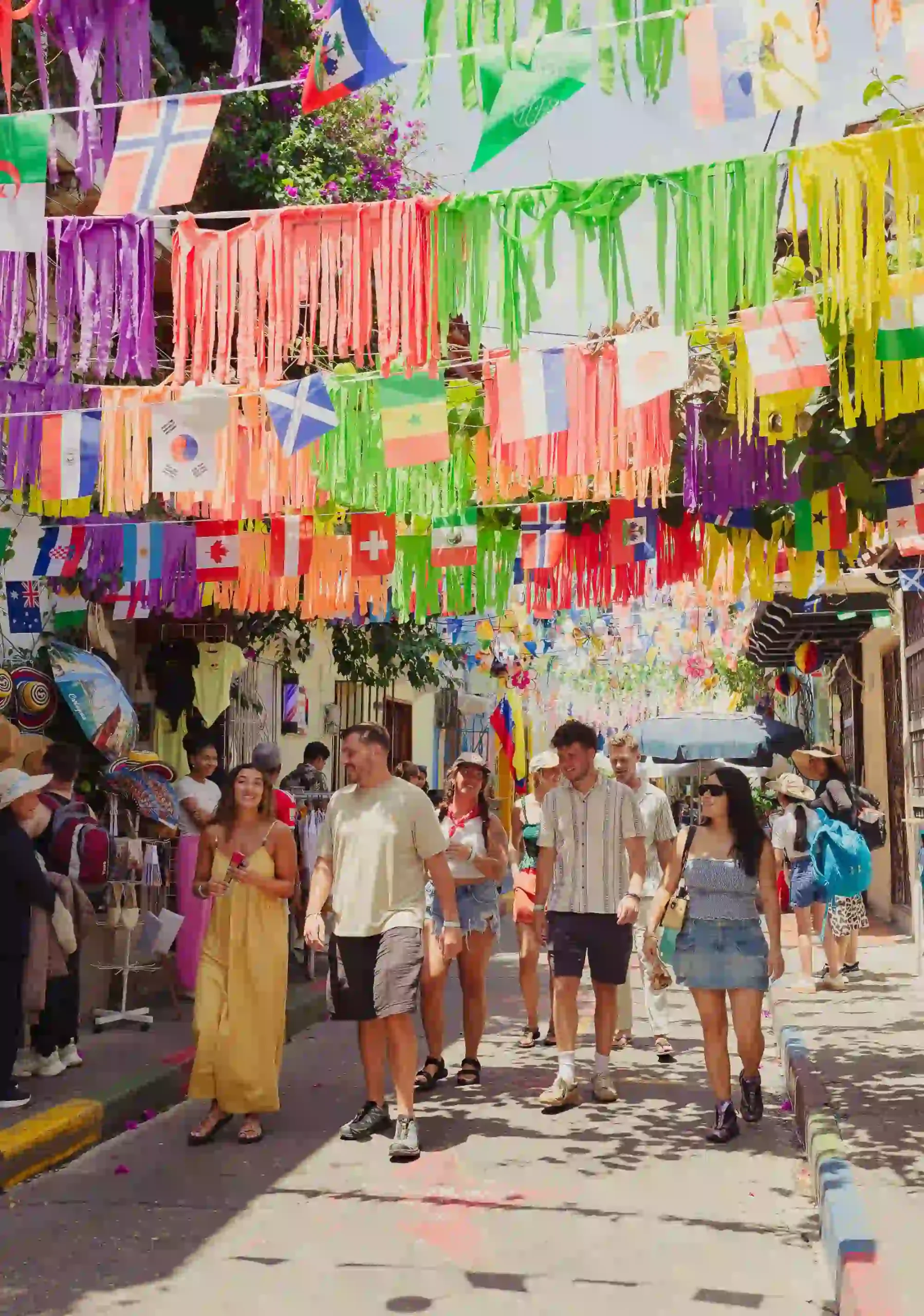
Taste Cartagena With Sherpa Food Tours
We recently launched our Cartagena food tour, and building it together with our local team was one of the most fascinating processes we’ve been through. Every dish on our route connects to at least one of the cultural forces that shaped this city.
The tour walks you from Getsemaní into the Walled City over one afternoon: 12+ tastings, local guides who grew up here, and the kind of stories and context you won’t get by wandering into restaurants on your own.
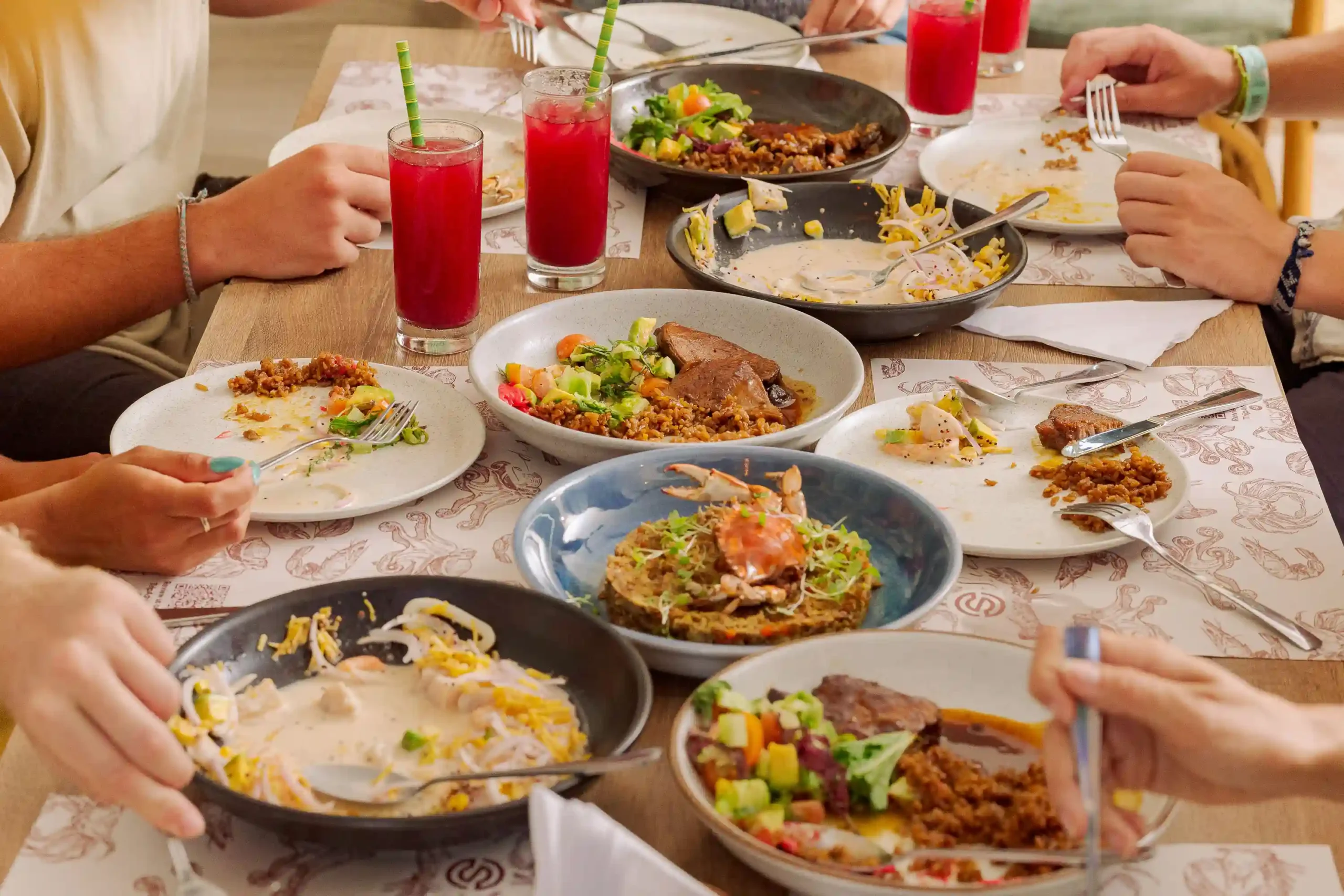
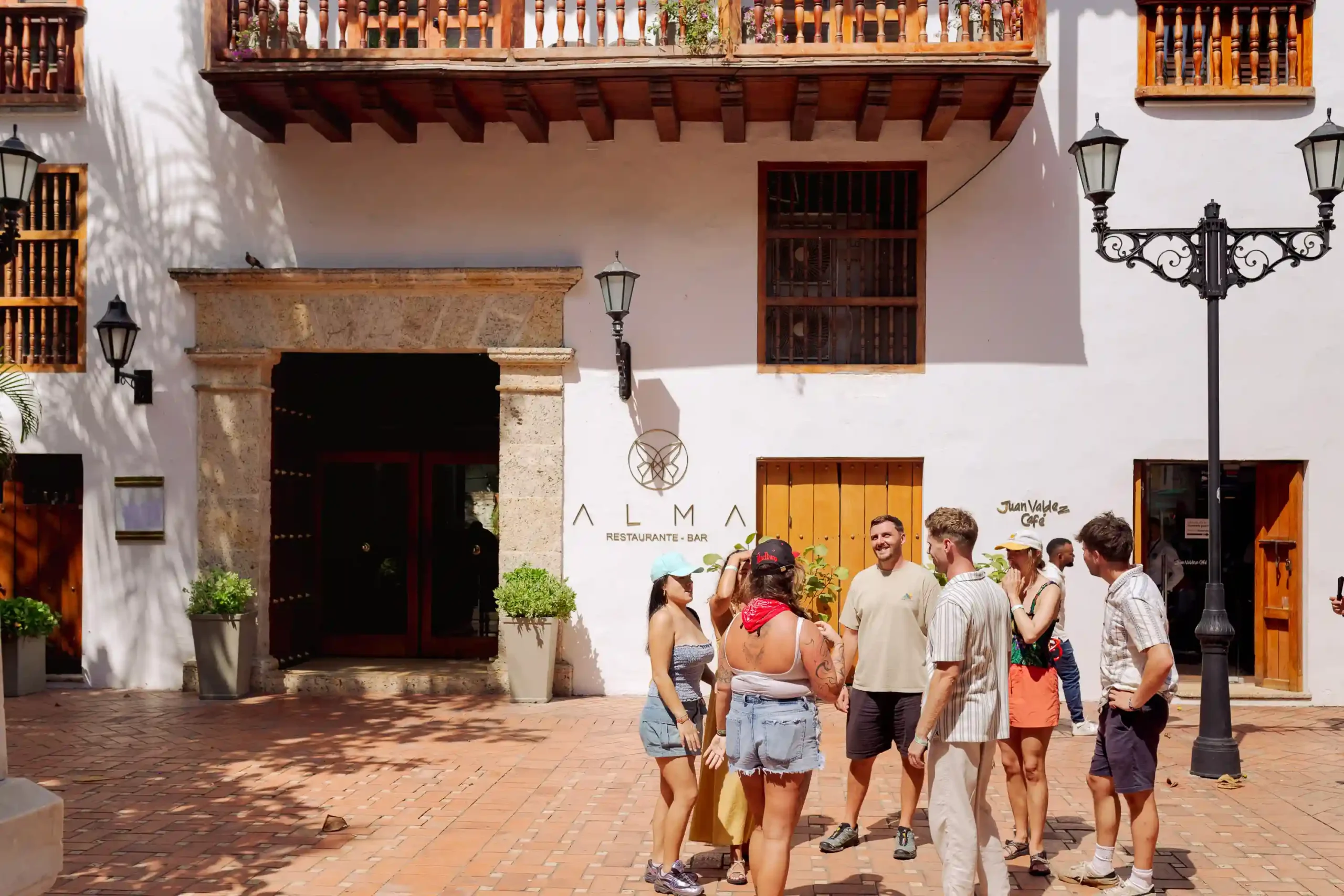
This is what we do in every city: we eat where locals eat, we learn the story behind the plate, and we make sure you leave knowing the city better than when you arrived. Cartagena is our newest city, but the standard is the same one that earned our Buenos Aires tour the title of best food tour in the world.
FAQs: Food in Cartagena
Is food in Cartagena expensive?
It depends on where you eat. Street food — arepas de huevo, carimañolas, empanadas — runs between $0.50–$1.50 USD. A full (yet cheap) lunch at a local restaurant with fried fish, coconut rice, and patacón is around 8–$15 USD. Mid-range restaurants in Getsemaní or the Walled City sit around $15–$25 USD per person. Fine dining at places like Celele or Carmen can run $40–$80+ USD. So… you can eat extraordinarily well in Cartagena without spending much, as long as you know where to go.
Is Cartagena good for foodies?
It’s one of the most interesting food cities in the Americas right now. The combination of deep historical roots, a thriving street-food culture, and a new wave of chefs putting Caribbean Colombian food on the global map makes Cartagena genuinely exciting.
Is street food in Cartagena safe to eat?
Generally, yes — with common sense. Eat at stalls with high turnover (a line is a good sign). Fried food tends to be safer because of the heat of the oil. Avoid seafood ceviche at stalls that don’t look busy or where the product has been sitting out. Drink bottled or purified water. And if you want the peace of mind of eating at the right places with a local who knows what’s what; that’s exactly what a food tour is for.
What is Cartagena most famous for (food)?
Arepa de huevo is the iconic dish. Beyond that, arroz con coco, posta negra, whole fried fish with patacón, and the sweets sold by Palenqueras at the Portal de los Dulces.
What food should I avoid in Cartagena?
Not a specific food; more a specific context. Avoid restaurants directly on the main tourist plazas of the Walled City where the menu is in four languages and no locals are eating. The food at those spots tends to be overpriced and generic.
Also, if the ceviche doesn’t look like it was made recently, skip it.
Do I need to speak Spanish to eat well in Cartagena?
It helps, but it’s not essential. Most sit-down restaurants in the Walled City and Getsemaní have some English. At street stalls, pointing works fine, and the vendors are friendly enough that you’ll figure it out. That said, knowing a few words makes a difference: «con suero» (with the tangy cream), «bien tostado» (extra crispy), «sin picante» (no spice) can transform your order. Or just come on a tour with us and let the guide handle it.