Traditional Argentine drinks (and where to try them)
Argentine food is delicious, yes, but so are the drinks. Most people may already know about mate, malbec, and our obsession with fernet, but there’s a lot more to be said about traditional Argentine drinks.
In this travel guide, i’ll share insights behind the cups and glasses, and some tips on what to drink in Argentina during your stay.
Spoiler alert. As mentioned in our guide to Argentine food, for us, a drink is just another excuse to pause, share and extend the conversation.
Read on, and, as we say, ¡Salud! (Cheers).
The Non-Alcoholic Classics
Mate
You will see people carrying the «mate kit» under their arms everywhere: parks, offices, and universities.
Mate is the quintessential Argentine drink. The first to drink mate were the guarani: the indigenous people that hail from Argentina, Brazil and Paraguay. What we call Yerba, refers to the chopped yerba mate leaves, which are not steeped in water but rather poured into a container typically made from a bottle gourd.
Mate is drunk through a straw (but it includes a filter) or bombilla, after water is poured into the yerba-filled container.
Drinking mate is a ritual for us Argentines, as there are many rules and traditions to follow when sharing a mate with someone.
How Mate works
The Taste is bitter, grassy, and intense. I would say it’s an acquired taste, since it is not really friendly to the palate.
The Logic consists in one person (the cebador) pouring the water and passing the gourd. You drink it all the way down and pass it back. The cycle repeats endlessly.
There are codes and rules to drink the Mate. For example, don’t touch the metal straw since moving it ruins the filter or don’t say «Gracias» (thanks) when you return the cup unless you don’t want anymore. In Mate language, «Thank you» means «I’m done.»

Of course the best way to try it would be at an Argentine friend’s house, and i would definitely go for a soft yerba if it’s the first time(it might be intense for people who are not used to). But, if you are looking for a local spot to give it a try, The argentine experience offers a «Mate class» within its immersive dinner party.
In case i sparked your couriosity, check this full guide on Mate, where you’ll uncover its history, meaning in our culture, where to try it and some tips to buy your own Mate, and a friendly yerba.
Coffee Culture
For decades, coffee in Buenos Aires wasn’t really about the bean quality. To be honest, the coffee was often roasted with sugar (café torrado) and wasn’t great. But that never mattered, because the Café was more about the venue, the architecture, and the social meeting point.

Recently, a massive «Specialty Coffee» wave has hit the city, and now locals are paying attention to origins and roasting methods. Today, the two worlds coexist: the historic Bares Notables with their tuxedoed waiters (such as the legendary Café Tortoni), and the modern coffee shops (like The Kitchen, in Villa Ortúzar)

How to Order coffee in Buenos Aires (The Glossary)
If you sit at a traditional spot, forget the Italian or American names. Here is your cheat sheet to order like a local:
- Café chico: A simple espresso shot.
- Jarrito: A double shot served in a slightly taller glass mug.
- Cortado: The most popular order. Espresso «cut» with a dash of milk.
- Lágrima: The reverse. A glass of hot milk with just a «tear» (lágrima) of coffee drops.
- Café con Leche: Half coffee, half milk. Usually served for breakfast with medialunas (croissants).
Submarino
If you visit during winter, you have to try this. The Submarino is our childhood favorite. It is a glass of steaming hot milk served with a rectangular bar of dark chocolate on the side. You drop the «submarine» (the chocolate) into the milk and stir until it melts completely. It’s simple, nostalgic, and perfect for a cold afternoon.
Head to any of the classic cafés in Buenos Aires to enjoy this comfort drink.
The Sifón de Soda
Before we get into alcohol, we have to talk about the Soda Sifón. If you sit at a traditional Bodegón, the waiter usually won’t bring a fancy bottle of sparkling water. They will slam a refillable plastic or glass bottle on the table: The Siphon.
It is an absolute staple of the Argentine table. The carbonation is aggressive, the mechanism is loud, and it is democratic: some people use it to dilute wine (if it’s strong or cheap), to mix with vermouth, or just to drink plain. It is not just water but a piece of the porteño heritage.

Alcoholic Argentine Drinks
Argentine Wine
We are a «New World» wine country, which means we navigate by grape, not by region. Though Malbec is the most famous variety, our country is rich in resources and we also produce a great Torrontés and many other varieties like Pinot Noir, Petit Verdot, Bonarda, Cabernet Sauvignon and Merlot.


The main highlights to try would be:
Malbec
Originally from France, it found its perfect home in Mendoza. It is robust, dark, and the absolute best partner for our steak.
Torrontés
If you want something truly unique, try this. It is not only my favourite but also the only grape 100% native to Argentina (born from a cross between two colonial vines). It grows in the high altitudes of Salta (north of the country). It smells incredibly sweet and floral, but it tastes dry and crisp.
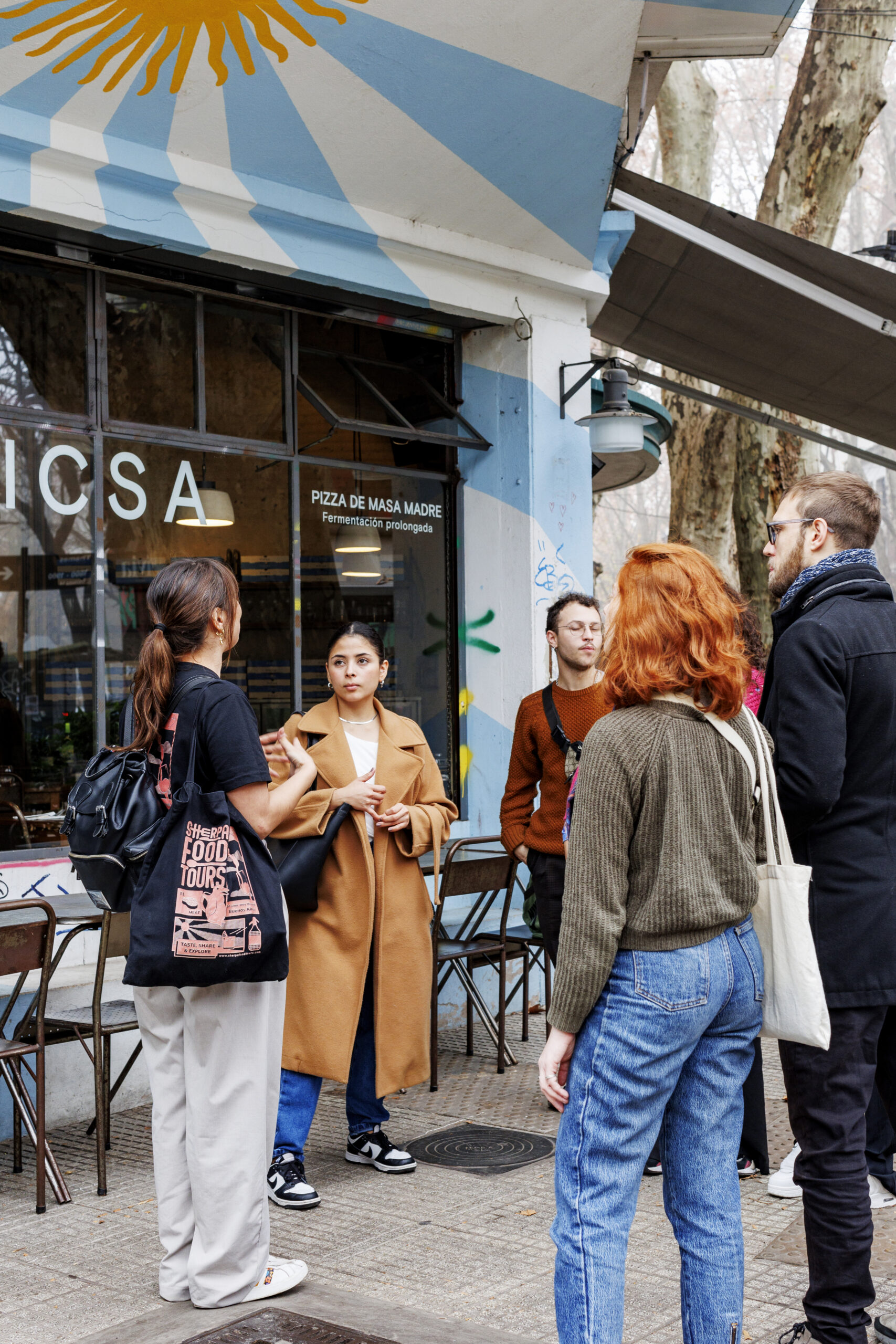
Looking for a wine-tasting experience? Join our Palermo Food Tour, and enjoy not only the best (and more representative) wine in Argentina, but also a full culinary journey.

Fernet with Coca Cola
Argentina is the #1 consumer of Fernet globally. If you’ve ever tried this bitter Italian spirit on its own, you might be wondering: why? It tastes like medicine. I know, but we never drink it straight. We mix it with Coca-Cola to create the unofficial national drink. It is the fuel of every asado, house party, and pre-game gathering.
Though you can try it at any bar, you can always prepare your own to get the full local experience
Keys to prepare your Fernet con Coca
- The perfect ratio would be 70/30. The standard measure is 30% Fernet, 70% Coke, and ice all the way to the top (no ice, no fernet).
- A good Fernet must have a thick layer of foam on top. This could be consider an art form (If it actually was, some of my friends would be at the Louvre). The reaction between the herbs in the Fernet and the gas in the soda is volatile, son don’t just dump it. If you pour the Coke too fast, it will overflow instantly.
Tilt the glass 45 degrees (like pouring a draft beer) and pour the Coke slowly. As the glass fills up, straighten it slowly to let the foam rise just to the rim without spilling. - Unlike wine, which is for dining, Fernet is for talking. It’s a social drink, often prepared in a communal jug (or a cut-open plastic bottle called a «Viajero» at music festivals) and passed around.


You haven’t truly experienced Argentina until you’ve tasted this unofficial national drink. Discover more about in our deep dive into the Fernet culture in Buenos Aires.
Vermouth
Vermouth (or vermú, as we like to pronounce it) is a fortified wine, flavored with botanicals. It has been produced in Argentina since 1925, after being brought over by Italian immigrants. Vermouth has slowly but surely become a signature drink in Buenos Aires, where there are even some vermuterías dedicated to serving vermouth cocktails. Traditional vermouth is served with ice, soda water and a slice of orange.

The «Vintage» Comeback: Hesperidina & Legui
Recently, local bars have started dusting off bottles that were popular in the 1950s. These are the flavors of our grandparents that have made a massive comeback:
- Hesperidina: This was the very first patent ever registered in Argentina. Invented by an American immigrant in the 1860s, it is a liqueur made from bitter orange peels. It tastes like a sweeter, herbal tonic water.

- Legui: It was named after the legendary jockey Irineo Leguisamo, and is a sweet liqueur made from sugar cane and herbs. Old-schoolers used to drink it neat; modern bartenders are using it to sweeten complex cocktails.
Where to try the best cocktails in Buenos Aires? I would definitely go for Presidente Bar, Tres monos or Florería Atlántico.
Why These Drinks? The Selection Criteria.
If there is one thing that defines Sherpa, it is our deep expertise in local culture and gastronomy. We don’t serve every single one of these drinks on our tours—mostly because you would definitely leave intoxicated!—but we believe in the importance of showing you the full picture of our country, in all its variety.

I didn’t choose these drinks based on a generic «Top 10» list or even just the ones I personally like. I chose them because they define the rhythm of life in Argentina.
Here is how this guide was curated:
1. It’s not only about the taste: As i said, in Argentina drinking is a social verb. I prioritized beverages that serve as a bridge between people. Mate isn’t just an infusion; it’s an excuse to talk. Fernet isn’t just a cocktail; it’s the fuel of our gatherings. If it doesn’t bring people together, it’s not on this list.
2. Regionality: Argentina is huge, and our geography dictates what we drink. I selected drinks that tell the story of our land.
3. The Nostalgia Factor: there’s no way to understand Argentine flavor without understanding our history (and our immigrants). I included drinks like the Submarino and vintage aperitifs because they carry history and are kept alive by a new generation of bartenders.
4. Locally Vetted: I know the difference between a «tourist trap» drink and a local staple. These are the beverages you will actually see on the tables of a parrilla on a Tuesday night or at a family lunch on Sunday.
A Toast to Tradition
Argentina’s traditional beverages are a reflection of the country’s rich cultural tapestry and social customs. From the communal rituals of sharing mate to the nationwide affection for Fernet con Coca, each beverage tells a story of heritage and community.
So, raise your glass and immerse yourself in the flavors that define Argentina’s spirited identity. ¡Salud!